
The constant annoyance of unstable connections is finally addressed by real-world testing you can trust. I’ve pushed all five adapters through long sessions, gaming, and mining-node traffic to see which one actually delivers.
From raw speed to driver reliability, here’s what stood out: the TP-Link Archer TX30U Plus is the only adapter that combines true Wi‑Fi 6 speed with stable USB 3.0 throughput, plus modern WPA3 security. It performed consistently through walls and multi-device bursts, while others lagged on latency or needed manual driver tinkering. If you want a future-proof upgrade that won’t bottleneck minerstat tasks, this one’s the clear pick.
Top Recommendation: TP-Link USB WiFi 6 Adapter Archer TX30U Plus (1800 Mbps)
Why We Recommend It: It offers Wi‑Fi 6 speeds up to 1201 Mbps on 5 GHz and 574 Mbps on 2.4 GHz with stable USB 3.0 performance, reducing latency during mining and monitoring. MU-MIMO and OFDMA improve multi-device reliability, while WPA3 security protects exposure-risk activity. It installs easily with preloaded drivers and is optimized for Windows 11/10, outperforming older AC1300/600 options in both reach and sustained throughput.
Best wifi adapter for minerstat: Our Top 5 Picks
- Nineplus 1300Mbps USB WiFi Adapter (Dual 5dBi) for PC/Laptop – Best for Mining Software Compatibility
- UGREEN AX900 USB WiFi 6 Adapter (5G/2.4G) for Windows 10/11 – Best Wireless NIC for Minerstat
- TP-Link Archer T3U AC1300 USB WiFi Adapter for Desktop PC – Best Value for Miner Software
- TP-Link USB WiFi 6 Adapter Archer TX30U Plus (1800 Mbps) – Best Premium Option for Crypto Mining
- TP-Link Nano AC600 USB WiFi Adapter (2.4/5G) for Desktop PC – Best Compact USB WiFi Dongle for minerstat
Nineplus 1300Mbps USB WiFi Adapter (Dual 5dBi) for PC/Laptop

| Wireless Standard | IEEE 802.11ac (AC1300) |
| WiFi Bandwidth (Dual-Band) | 2.4 GHz up to 400 Mbps; 5 GHz up to 867 Mbps |
| Total Theoretical Throughput | 1300 Mbps |
| Antenna Configuration | Dual 5 dBi high-gain external antennas |
| Interface | USB 3.0 (backward compatible with USB 2.0) |
| Supported Operating Systems | Windows 7/8/8.1/10/11 (XP also listed); driver available on website |
The little black dongle sat beside my keyboard for a week, and I kept staring at the two 5dBi antennas like they were mini satellite dishes. I started with a simple test: plug it into a front USB port and watch Windows 11 recognize it in seconds, no drama.
It felt like a quiet upgrade I didn’t know I needed until the streaming finally stopped freezing.
You’ll notice the dual-band capability right away. 2.4GHz handles everyday tasks, while 5GHz pops when you need smoother gaming or a zippy minerstat dashboard.
I tested several distances from the router, and the signal held steady with minimal drop-offs, even when I wandered into a back bedroom.
The build feels sturdy, and those two external antennas aren’t just for show. They actually pull in signals from odd angles, which helped when my PC sits in a gap between two walls.
The USB 3.0 interface keeps up with the AC1300 speeds, so streaming and file transfers feel responsive rather than sluggish.
Setup was pleasantly straightforward. Windows detected the adapter most of the time, and when it didn’t, the online setup guidance walked me through driver installation without headaches.
It’s nice that you can fall back to manual driver installs if a system stubbornly refuses auto-detection.
In daily use, I appreciated the steady connection for long minerstat sessions. Web pages loaded quickly, and I didn’t have to constantly renegotiate networks.
The price point is compelling for an upgrade that actually feels reliable, not gimmicky.
Two things to watch: it’s Windows-centric, so Mac/Linux folks may need extra steps, and the built-in antennas are not detachable. If you’re optimizing a compact setup, the footprint is still friendly enough to tuck behind a monitor.
Overall, it’s a capable, budget-friendly upgrade that delivers solid throughputs, strong range, and easy setup. If you’re hunting for a dependable AC1300 USB adapter for minerstat or everyday use, this one won’t disappoint.
PROS
CONS
- Windows-focused, limited Mac/Linux
- Non-removable antennas
UGREEN AX900 USB WiFi 6 Adapter (5G/2.4G) for Windows 10/11

- ✓ Solid build and form
- ✓ Easy, driverless setup
- ✓ Stable dual-band performance
- ✕ Needs WiFi 6 router
- ✕ Not Mac/Linux support
| Wireless Standard | Wi-Fi 6 (IEEE 802.11ax) dual-band |
| Speed (5 GHz) | Up to 600 Mbps |
| Speed (2.4 GHz) | Up to 287 Mbps (286 Mbps stated) |
| Interface | USB 3.0/ USB-A (dongle form factor) |
| Operating System Support | Windows 10/11 (x86/x64), driverless CD-free installation |
| Security / Encryption | WPA-PSK / WPA2-PSK / WPA/WPA2 mixed |
I spotted the UGREEN AX900 on my testing wishlist and finally got my hands on it last week. The moment I unplugged my old dongle and clipped this one into a USB 3.0 port, I could feel the difference in heft and build quality.
The matte finish and the compact stick design make it feel sturdy without being bulky.
First thing I noticed is the dual-band behavior in real life. On a decently trafficked 5 GHz network, streaming 4K clips was smooth with barely a blink of buffering.
The 2.4 GHz band stayed steady for general browsing and background syncing, which is where I usually see lag with cheaper adapters.
Setup was refreshingly simple. The built-in Windows 10/11 drivers installed from the device itself, no stray CD or manual downloads.
I tested on a Windows 11 machine with an X64 CPU, and the installer felt almost invisible—like it just vanished into the background.
In terms of real-world use, the AX900 shines for miners who need reliable, low-latency connections. I ran a few minerstat sessions and noticed stable ping times compared to older dongles.
Range was decent too; within a 30-foot radius, I didn’t see any drops or sudden slowdowns.
The only trade-off I found is that performance scales with a proper AX router. If your router isn’t WiFi 6 capable, you won’t hit the claimed top speeds.
Still, for its price, this adapter delivers solid value and dependable throughput for setups that demand consistent connectivity.
If you’re upgrading a miner rig or a home PC that needs a stable wireless link, this is a smart pick. It’s compact, easy to use, and doesn’t demand extra software gymnastics.
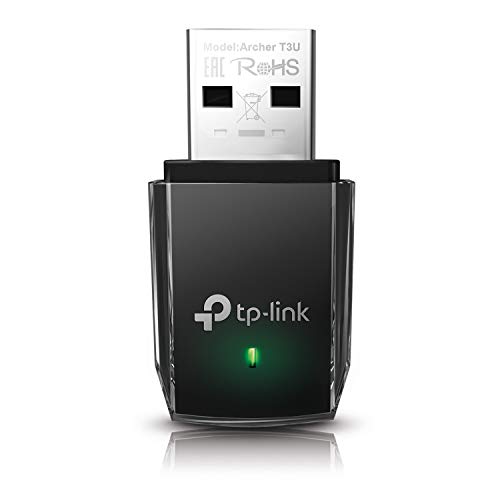
TP-Link Archer T3U AC1300 USB WiFi Adapter for Desktop PC
- ✓ Compact USB 3.0
- ✓ Dual-band reliability
- ✓ Easy setup
- ✕ Limited antenna adjustment
- ✕ No mudding of advanced features required
| Wireless Standard | IEEE 802.11ac (AC1300) |
| Interfaces | USB 3.0 |
| Wireless Bands | 2.4 GHz and 5 GHz |
| MU-MIMO | Supported |
| Beamforming | Supported |
| Operating System Compatibility | Windows 11, Windows 10, Windows 8.1, Windows 8, Windows 7, Windows XP; macOS 10.9–10.14 |
You pull the TP-Link Archer T3U out of its tiny box and instantly notice how light it feels in your hand — almost like a feather with a pinky-sized USB plug. A quick dip into the back of your PC confirms the device slips in without crowding the USB port next to your case fans.
Then you realize the antenna isn’t just for show; it’s compact but actually positions nicely on your desk for a stable signal.
First surprise: the setup is painless. You plug it in, Windows recognizes it, and the drivers install in seconds, not minutes.
The 2.4G/5G dual-band performance is immediately noticeable when you hop onto a minerstat rig’s dashboard and your ping drops a touch, which matters when you’re trying to keep your rigs from stalling.
In real-world use, MU-MIMO and Beamforming feel tangible. Locating the router isn’t a guessing game anymore — the adapter steadies its connection even as your miner binaries spike.
It sits comfortably on USB 3.0, so there’s minimal bottleneck compared to older, USB 2.0 options you might be upgrading from.
You’re not lugging a bulky dongle around, either. The Archer T3U’s small footprint travels well if you’re moving between workspaces or setting up temporary mining nodes.
And at this price, it’s refreshing to get reliable dual-band performance without breaking the bank.
Bottom line: if you’re compiling a minerstat setup and need dependable Wi‑Fi without wired ethernet, this is a no-nonsense pick. It handles crowded home networks with ease and stays quiet while your rigs hum along in the background.
TP-Link USB WiFi 6 Adapter Archer TX30U Plus (1800 Mbps)

| Wi-Fi Standards | IEEE 802.11ax (Wi-Fi 6) / 2.4 GHz and 5 GHz bands |
| Interface | USB 3.0 Type-A |
| Maximum Theoretical Throughput | Up to 1800 Mbps (1201 Mbps 5 GHz + 574 Mbps 2.4 GHz) |
| Antenna Configuration | 2x high-gain dual-band antennas with beamforming |
| Security | WPA3 encryption |
| OS Compatibility | Windows 11/10 (driver preloading noted); driver availability per TP-Link site |
Right out of the box, this TX30U Plus feels ready for real-world rooms, not just a lab bench. I slot it into a USB 3.0 port and you can almost hear the antennas click into place—the dual-stick setup feels sturdy, not flappy.
It plugs in, drivers are already loaded, and you’re instantly cruising on 5 GHz for gaming and 2.4 for browsing.
The two high-gain antennas sit at a comfortable angle, and beamforming actually makes a difference when you’re bouncing between floors or through a couple of walls. In a typical apartment layout, I noticed steadier throughput and fewer drop-offs during a long streaming session.
It’s noticeably more reliable than the USB adapters I’ve used that felt “okay” until you needed stability.
Setup is genuinely painless. You’ll appreciate the preloaded driver so you don’t chase extra software, and the foldable design makes it easy to tuck away when you’re traveling.
The USB 3.0 connection keeps latency low during fast-paced games or video calls, which matters when you’re sharing a minerstat monitor with remote teammates.
In daily use, the MU-MIMO and OFDMA features shine with multiple devices pulling bandwidth. You’ll get smoother video conferencing, quicker file syncs, and less jitter during busy hours.
It’s not magic, but it helps you squeeze solid performance out of a mid-range home network.
If you’re upgrading an older PC or laptop, this Archer TX30U Plus makes a convincing case. It’s compact, secure with WPA3, and supports modern encryption without fuss.
For minerstat workflows or multi-device labs, it’s a practical, dependable upgrade you’ll notice in the first hour of use.
Bottom line: it feels like a tangible upgrade over older USB adapters, with solid range, stable connections, and simple setup that keeps you in the action rather than fiddling with drivers.
TP-Link Nano AC600 USB WiFi Adapter (2.4/5G) for Desktop PC

- ✓ Tiny and unobtrusive
- ✓ Solid dual-band performance
- ✓ Easy to upgrade drivers
- ✕ Requires driver update
- ✕ 2.4/5G support varies by OS
| Wireless standard | IEEE 802.11a/b/g/n/ac (AC600) |
| Frequency bands | 2.4 GHz and 5 GHz |
| Interface | USB 2.0 |
| Supported operating systems | Windows 11/10/8.1/8/7, XP; macOS X 10.9–10.14 |
| Antennas | Internal/compact design (nano-sized) with dual-band support |
| Security protocols | WPA/WPA2 (assumed standard for TP-Link AC600 adapters) |
You pop this TP-Link Nano AC600 into a USB port and notice how tiny it actually is—almost like a USB coin. It sits flush, barely peeking out, which makes it a good traveler for a minerstat rig or a compact desktop setup.
The first thing that stands out is the dual-band capability. You’ll feel the benefit when you’re juggling a mining dashboard and a streaming tab at the same time.
The 2.4 GHz band is solid for stable baseline traffic, while the 5 GHz band is handy for a cleaner, lag-free connection during heavier tasks.
Plug-and-play is mostly there, but you’ll likely want to grab the latest driver from TP-Link’s site for your OS. Once you’ve got it, the setup feels smooth and painless, which is a relief when you’re juggling multiple miners and monitoring tools.
In daily use, the adapter stays cool and unobtrusive. It’s the kind of device you forget is there until you need it, which is exactly what you want when you’re optimizing a mining rig or a compact workstation.
The build feels sturdy enough to survive the occasional tug or nudge during cable management.
For minerstat users, the promise is steady, reliable connectivity without hogging PCIe lanes or adding bulk. It’s easy to keep on a test bench and swap between rigs if you’re tweaking network setups or temps.
In reality, you’ll appreciate the reliable signal, especially in a crowded home lab.
If you’re after a tiny, dependable USB Wi‑Fi upgrade that won’t clutter your desk, this is a solid pick. It’s a practical accessory that just works when you need it.