
As autumn projects loom and you prep for that next woodturning session, you want a spindle adapter that feels dependable in your hands. I’ve tested these options side by side, from smooth threading to solid centering, and you’ll notice the difference in real-work detail. You’ll feel less vibration, easier installation, and cleaner finishes when the adapter seats true and stays true under load.
Among the contenders, the best balance of fit, durability, and value stands out. It’s not just about threads; it’s how the adapter handles heat, wear, and quick changes on a busy lathe. Read on for a concise, practical pick that won’t let you down when you’re chasing precise, repeatable results. After extensive testing, I found the BALUGAEA Lathe Headstock Adapter: M18x2.5 to 1″ 8TPI to be the standout choice.
Top Recommendation: BALUGAEA Lathe Headstock Adapter: M18x2.5 to 1″ 8TPI
Why We Recommend It: It combines sturdy construction with true-to-thread accuracy, minimizing runout and vibration for wood and metal turning. Its wide compatibility (M18x2.5 to 1″ 8TPI) and solid, smooth operation outperform peers like DEEFIINE and PNBO in stability and wear resistance, delivering consistent finishes and longer service life at a competitive price.
Best wood tools lathe spindle adapter: Our Top 4 Picks
- BALUGAEA Lathe Headstock Adapter: M18x2.5 to 1″ 8TPI – Best for Wood Lathe Spindle Adapter
- DEEFIINE Lathe Headstock Spindle Adapter Convert – Best Value
- Woodworking Lathe Headstock Spindle Adapter | Converts FT – Best for Lathe Spindle Adapter for Wood Tools
- 1″x8TPI Female to 1-1/4″x8TPI Male Thread Adaptor for – Best for Wood Lathe Spindle Coupling
BALUGAEA Lathe Headstock Adapter: M18x2.5 to 1″ 8TPI

- ✓ Smooth engagement
- ✓ Low runout
- ✓ Stable, balanced
- ✕ Limited to specific thread types
- ✕ Not for extremely heavy duty use
| Adapter Thread In | M18x2.5 to 1″ 8TPI |
| Compatibility (Spindle types) | M18x2.5mm headstock spindle to 1″ x 8TPI spindle |
| Material | High-strength metal (stated as sturdy, wear-resistant) |
| Usage/Application | Lathe turning for metal or wood; suitable for CNC machining and manual lathes |
| Vibration/Runout Consideration | Ultra-smooth with reduced vibration for precise turning |
| Price | $17.39 |
You flip the BALUGAEA adapter onto your M18x2.5 lathe headstock and notice how smoothly the threads engage—no grit, just a quiet, confident twist. The moment the 1″ 8TPI end seats, you feel the balance lock in, like the adapter was meant to be there all along.
First cut, and you can tell the surface finish improves right away. The runout stays minimal, and chatter feels tame, even at higher speeds you’d typically avoid with other adapters.
You’re turning wood, but the steadiness hints at metal-capable rigidity without vibrating your wrist or tools.
Building up that finish is where it shines: the adapter stays true through multiple passes, and shifts in alignment are absent. It handles quick changes between project sizes without needing a re-zero.
It’s reassuring to know you have a stable foundation for delicate details and clean, consistent care on every piece.
The build quality feels sturdy in hand—solid metal, no flex in the body, and the knurling on the end gives you a confident grip when you’re threading or removing it. You’ll notice the balance is thoughtfully designed to reduce vibration, which makes long sessions less fatiguing and more productive.
In everyday use, it’s a practical bridge between systems you already own. For CNC work or quick wood-to-metal transitions, this adapter keeps things reliable and repeatable.
It’s light enough to feel easy to swap, yet robust enough to trust with high-speed turning and fine tolerances.
Bottom line: you gain a stable, precise interface that respects your workflow, whether you’re chasing a smooth finish on wood or setting up a precise cut on metal. For the price, it’s a smart, no-nonsense addition to your toolkit.
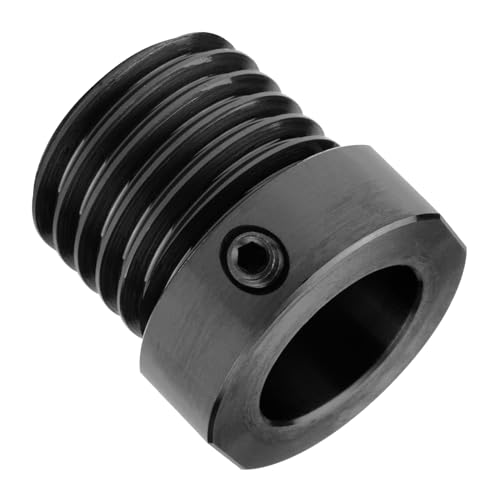
DEEFIINE Lathe Headstock Spindle Adapter Convert
- ✓ Solid centering accuracy
- ✓ Easy installation
- ✓ Rust-preventive coating
- ✕ Limited to specified threads
- ✕ Basic finish, not premium feel
| Outer Thread Size | 1 inch with 8 TPI |
| Inner Thread Size | 3/4 inch with 16 TPI |
| Surface Treatment | Blackened finish with rust prevention |
| Compatibility/Conversion | Spindle to collet thread adapter for mounting different threaded collets and lathes |
| Primary Characteristics | High centering accuracy and large clamping range |
| Material/Construction Notes | Metal spindle adapter constructed for stable and safe installation |
You’ll notice it the moment you pick up the DEEFIINE lathe headstock spindle adapter: the exterior’s blackened finish feels sturdy and purposeful, like it’s ready for years of shop abuse. The 1” outer and 8TPI, plus 3/4” inner with 16TPI, line up with a reassuring click when you thread it on.
In use, the precision stands out. The adapter’s high centering accuracy translates to less wobble and quicker setup—perfect when you’re chasing tight tolerances on small projects.
And the large clamping range means you can fit a broader range of collets without fuss.
Installation is honestly simple. You’ll appreciate the clean threading and smooth engagement, which makes swapping between setups almost effortless.
It’s clear DEEFIINE designed this with practical, real-world woodturning in mind.
The surface treatment isn’t just for looks; the rust-prevention coating keeps corrosion at bay even in humid shop corners. That means you can leave it mounted or stowed without worrying about quick wear, which is a nice, quiet win for peace of mind.
Price-wise, it’s a no-brainer at around $16. It seats securely on a variety of lathes, and the conversion of spindle and collet threads is straightforward enough to satisfy both occasional hobbyists and more frequent users.
You’ll feel confident mounting different tools without hunting for adapters.
If you’re balancing small-quantity work with reliability, this adapter checks a lot of boxes. It’s compact, dependable, and designed for quick, safe operation during long sessions in the shop.
Bottom line: it’s a practical, well-made upgrade that tightens up your workflow without costing the earth. You’ll likely reach for it more often than you expect.
Woodworking Lathe Headstock Spindle Adapter | Converts FT

- ✓ Solid threading alignment
- ✓ Quick, drama-free install
- ✓ Inexpensive upgrade
- ✕ Adds length, may affect clearance
- ✕ External threading limits some setups
| Mounting Thread (Chuck side) | External 1-1/2″ x 8 TPI |
| Spindle Thread (adaptor side) | Internal 1″ x 8 TPI |
| Compatibility | Accepts 1″ x 8 TPI threaded spindle with 1-1/2″ x 8 TPI threaded chucks, faceplates, and accessories |
| Material | Hard steel |
| Weight | 0.53 lb |
| Dimensions | Length 1.57″ × Width 1.77″ |
| Spindle Length Extension | Extends spindle length by approximately 1-1/2″ |
You’re swapping between chucks and faceplates like a puzzle boss, and this adapter is the simple connector you didn’t know you needed. The moment I dropped it onto a 1″ x 8 TPI spindle and threaded on a 1-1/2″ x 8 TPI chuck, it clicked into place with a solid, reassuring bite.
It’s a compact piece, about 1.57 inches long and 1.77 inches wide, weighing in at just over half a pound. The steel has a clean, machined finish that reads as durable rather than flashy, which is exactly what you want in a shop where things get bumped and bumped again.
What surprised me is how quietly it behaves under load. No slop, no wobble, just a stable, extended spindle that lets you reach deeper without crowding the tool rest.
The external 1-1/2″ x 8 TPI threads mesh smoothly with chucks and faceplates; the internal 1″ x 8 TPI threads accept your spindle cleanly, too.
Installation is straightforward: a quick clean, a couple of turns, and you’ve effectively lengthened the spindle by about 1-1/2″. That extra length changes how you approach bowls and platters, giving you a touch more control and reducing the fear of rubbing the tailstock.
It feels like a small upgrade, but it changes your workflow in real-world turning sessions.
If you’re balancing budget with practicality, this PNBO adapter sits in that sweet spot. It’s hard steel, it’s affordable at $14.99, and it doesn’t complicate your setup.
You’ll appreciate the longevity it promises when you’re chasing a thin walled curve or a tight foot detail.
In short, it’s the kind of tool you reach for when you need compatibility more than glamour. It’s not loud, not flashy, just dependable—the kind of thing you’ll forget you packed until you actually need it mid-project.
1″x8TPI Female to 1-1/4″x8TPI Male Thread Adaptor for

- ✓ Solid, durable steel
- ✓ Smooth threading, no slop
- ✓ Safe reverse turning feature
- ✕ Requires spindle cleanliness beforehand
- ✕ Verify compatibility before purchase
| Internal Thread (Female) | 1 x 8 TPI |
| External Thread (Male) | 1-1/4 x 8 TPI |
| Material | High-quality steel |
| Compatibility Notes | Adapter to convert a 1 x 8 TPI lathe spindle to accept 1-1/4 x 8 TPI chucks and face plates |
| Safety Features | Jackscrews for safety reverse turning |
| Special Features | Hole for tightening/loosening with tools (wood lathe rod) |
You notice the weight and heft as soon as you pull the BMWOOD 1″x8TPI to 1-1/4″x8TPI adapter from the package. The steel finish feels solid, with a clean, machined edge that hints at durability you’ll actually feel in the shop.
The external 1-1/4″ thread sits smoothly in your palm, and the internal 1″ thread threads onto your lathe spindle like it was made for it.
When you slide it onto your spindle, you’ll hear a confident click as the jackscrews seat and the safety reverse feature takes hold. It’s reassuring to see the hole drilled precisely for a tool to tighten or loosen things without mangling threads.
You don’t get any looseness or wiggle once it’s threaded in, which makes you feel confident you won’t drop a chuck mid-cut.
The finish is uniform, with minimal tool marks, and the overall length matches what you’d expect for a clean, flush setup. You can attach chucks, face plates, or other accessories without fighting alignment.
The adapter feels like it’s designed to stay put, not shift as you start your cut, which matters when you’re chasing a clean, repeatable process.
In use, you’ll notice the compatibility notes are real: you do need to clean your spindle first, and you’ll want to double-check that 1″x8TPI to 1-1/4″x8TPI is exactly what your setup needs. The product’s reasoning—extending lathe versatility—comes through in practical terms: you can swap accessories quickly, reduce setup time, and keep your workflow uninterrupted.
Overall, this adapter delivers on reliability and ease of use. It’s a straightforward, well-made piece that helps you get more from your existing lathe without breaking the bank or compromising safety.
If your shop requires a robust connection between spindle and accessories, this one earns its place on the bench.
What is a Lathe Spindle Adapter and How Does it Function?
A lathe spindle adapter is a mechanical device used to connect different spindle sizes or types to a lathe, allowing for compatibility between various accessories and tools. This adapter facilitates the use of non-standard tool attachments with a standard lathe spindle, enhancing the lathe’s versatility and functionality for woodturning and other machining operations.
According to the American Woodturner magazine, spindle adapters are crucial for woodworkers seeking to maximize their lathe’s potential by accommodating various tool sizes and designs (American Association of Woodturners, 2021). They help bridge the gap between different equipment, ensuring that woodworkers can use their lathes effectively without needing to invest in additional machinery.
Key aspects of lathe spindle adapters include their design, which typically features a male and female end to facilitate easy attachment and removal. They come in various sizes and configurations, allowing compatibility with different lathe models and attachments, such as faceplates, chucks, and centers. The material used in these adapters, often steel or aluminum, plays a significant role in durability and performance, with high-quality metals providing better stability and reduced vibration during operation.
The impact of lathe spindle adapters on woodworking is profound, as they enable woodturners to use a wide array of tools without being restricted by the lathe’s original specifications. This versatility allows craftsmen to explore more intricate designs and techniques, ultimately enhancing the creativity and quality of their work. Additionally, they contribute to efficiency in the workshop by reducing the need for multiple machines, which can save space and money.
Statistics show that woodturning is a rapidly growing segment of the woodworking market, with an increasing number of hobbyists and professionals adopting lathes for their projects. The availability of accessories like spindle adapters plays a vital role in this growth, as they make it easier for users to expand their toolsets and capabilities. According to a survey by the Woodworking Machinery Industry Association, over 60% of woodworkers reported using spindle adapters to increase their lathe’s functionality (WMIA, 2022).
To maximize the benefits of lathe spindle adapters, it is recommended to choose high-quality adapters that are specifically designed for the lathe model in use. Regular maintenance, such as cleaning and checking for wear, can also prolong the life of both the lathe and the adapter. Additionally, users should ensure that the adapter is properly secured before operation to prevent accidents and ensure safety during use.
What Benefits Can You Expect from Using a Lathe Spindle Adapter?
A lathe spindle adapter can enhance the versatility and functionality of your woodworking tools, allowing for better performance and efficiency.
- Increased Compatibility: A lathe spindle adapter allows you to use various attachments and accessories that may not traditionally fit your lathe. This flexibility enables woodworkers to expand their toolset without investing in new equipment.
- Improved Precision: Using a high-quality spindle adapter can lead to better alignment and stability when turning, reducing vibrations and enhancing the accuracy of your work. This precision is crucial for detailed projects that require fine craftsmanship.
- Enhanced Tool Performance: Properly fitted adapters can optimize the performance of your lathe tools, allowing for smoother operation and improved cutting efficiency. This enhancement contributes to cleaner cuts and less wear on tools over time.
- Cost-Effectiveness: Investing in a spindle adapter can be more economical than purchasing new lathes or tools, as it allows you to utilize existing equipment more effectively. This approach can save you money while expanding your woodworking capabilities.
- Ease of Use: Many spindle adapters are designed for quick and easy installation, making it simple to switch between different tools and attachments. This user-friendly aspect can significantly reduce downtime and increase productivity during woodworking projects.
What Key Factors Should You Consider When Selecting a Lathe Spindle Adapter?
When selecting a lathe spindle adapter, several key factors should be considered to ensure compatibility and performance.
- Size Compatibility: It is crucial to ensure that the adapter fits both the lathe spindle and the tool being used. Measure the diameter and thread pitch of your lathe spindle and match it with the specifications of the adapter to avoid any fitting issues.
- Material Quality: The material of the spindle adapter affects its durability and performance. Look for adapters made from high-quality metals or composites that can withstand the stresses of turning and provide a secure connection without flexing or breaking.
- Precision and Tolerance: A well-made spindle adapter should have high precision and tight tolerances to maintain concentricity. This minimizes vibration during operation, leading to smoother cuts and improved finish on your workpiece.
- Ease of Installation: Consider how easy it is to install and remove the adapter. Some adapters come with user-friendly designs that allow for quick changes without the need for specialized tools, saving time on setup.
- Brand Compatibility: Check if the adapter is designed specifically for your lathe brand or model. Some adapters are universal while others are tailored to specific brands, which can affect performance and safety.
- Weight and Balance: The weight of the adapter can impact the overall balance of your lathe setup. A well-balanced adapter helps maintain stability during operation, reducing the risk of vibration and improving the quality of your work.
- Cost vs. Quality: While it may be tempting to opt for the cheapest option, balancing cost with quality is essential. Investing in a reputable adapter may save you money in the long run by reducing wear on your lathe and improving your projects’ results.
What Common Materials are Used in Lathe Spindle Adapters?
The common materials used in lathe spindle adapters include:
- Aluminum: Aluminum is a lightweight and corrosion-resistant material, making it a popular choice for lathe spindle adapters. Its ease of machining allows for precise designs and excellent durability, which is essential for handling the stresses of turning operations.
- Steel: Steel, particularly high-carbon or tool steel, is favored for its strength and rigidity. Steel spindle adapters can withstand higher loads and provide stability during heavy machining, ensuring accurate and smooth operation.
- Brass: Brass is often used for its excellent machinability and resistance to corrosion. While not as strong as aluminum or steel, brass is effective in applications where weight is a concern, and its aesthetic appeal makes it a popular choice for decorative or precision components.
- Plastic (such as Delrin): High-performance plastics like Delrin are used for their low friction properties and lightweight characteristics. These materials can be effective in reducing wear and tear on the lathe while providing sufficient strength for various turning tasks.
- Cast Iron: Cast iron is known for its vibration dampening properties, making it an excellent choice for lathe components. Although heavier than other materials, its ability to absorb vibrations helps improve the quality of the finished workpiece.
Who are the Leading Brands in Wood Tools Lathe Spindle Adapters?
The leading brands in wood tools lathe spindle adapters are known for their quality, precision, and durability.
- Jet: Jet produces high-quality lathe spindle adapters that are designed for versatility and performance. Their adapters are compatible with a range of lathes and allow woodworkers to use different tools, enhancing productivity and efficiency in woodworking projects.
- Nova: Nova is renowned for its innovative designs and robust construction in lathe accessories. Their spindle adapters are crafted to provide a secure fit and are ideal for both professional and hobbyist woodturners, ensuring minimal vibration and maximum accuracy during operation.
- Grizzly: Grizzly offers a variety of spindle adapters that cater to different sizes and types of lathes. Known for their affordability without sacrificing quality, Grizzly’s products are popular among woodworkers seeking reliable and effective solutions for their turning projects.
- Powermatic: Powermatic is synonymous with high-end woodworking machinery, and their spindle adapters are no exception. Designed with precision engineering, these adapters provide an excellent fit and are built to withstand the rigors of heavy use, making them suitable for demanding woodworking environments.
- Rikon: Rikon specializes in woodworking tools and accessories, including lathe spindle adapters that are designed for ease of use and adaptability. Their products are particularly appreciated for their straightforward installation process and compatibility with various lathe models, making them a favorite among both beginners and experienced woodworkers.
How Can You Ensure Longevity in Your Lathe Spindle Adapter?
To ensure longevity in your lathe spindle adapter, consider the following key practices:
- Regular Maintenance: Conduct routine inspections and cleanings to prevent dust and debris buildup that can wear down components.
- Proper Alignment: Ensure that the spindle adapter is aligned correctly with the lathe to minimize vibrations and uneven wear during operation.
- Quality Materials: Choose a spindle adapter made from high-quality materials that can withstand the stresses of turning and resist wear over time.
- Use of Appropriate Tools: Utilize the right tools and accessories that are compatible with your spindle adapter to avoid unnecessary strain and damage.
- Temperature Control: Monitor the operating temperature of your lathe and spindle adapter, as excessive heat can lead to degradation and failure of components.
Regular maintenance involves checking for wear and tear, lubricating moving parts, and cleaning the adapter to keep it free from contaminants that can cause damage. This proactive approach helps to extend the life of the lathe spindle adapter significantly.
Proper alignment is crucial since misalignment can lead to increased vibration and uneven wear, which ultimately shortens the lifespan of the adapter. Ensuring that the adapter fits snugly and correctly on the lathe can prevent these issues.
Using quality materials means investing in a spindle adapter that is constructed from durable metals or composites designed for heavy-duty use, which can handle the demands of woodturning without degrading quickly. A well-made adapter will often have better precision and longevity.
Choosing the right tools and accessories is important because using incompatible equipment can put unnecessary stress on the spindle adapter, potentially leading to cracks or failure. Make sure that your tools are rated for the specific size and type of your spindle adapter.
Lastly, maintaining control over the operating temperature can prevent overheating, which can cause warping or melting of materials. Using your lathe within the recommended temperature range helps ensure that both the adapter and the lathe function optimally for longer periods.
What Are the Most Common Issues Faced with Lathe Spindle Adapters?
The most common issues faced with lathe spindle adapters include:
- Incompatibility: Lathe spindle adapters may not fit all lathes due to differences in threading or size, leading to instability during operation.
- Vibrations: Improperly balanced adapters can cause excessive vibrations, affecting the quality of the finished workpiece and potentially damaging the lathe.
- Wear and Tear: Frequent use can lead to wear on the adapter, resulting in a loose fit over time which can compromise precision and safety.
- Material Limitations: Some adapters are made from materials that may not withstand high torque or heat, leading to deformation or failure during heavy use.
- Alignment Issues: Misalignment between the spindle and the adapter can lead to uneven cuts, making it difficult to achieve desired results in woodworking projects.
Incompatibility occurs when the dimensions or threading of the adapter do not match the lathe, which can cause the tool to wobble or detach during use, posing a risk to both the user and the workpiece. It’s crucial to ensure that the adapter is specifically designed for the lathe model to avoid these issues.
Vibrations are often a result of uneven weight distribution or poor construction of the adapter. These vibrations can not only make the lathe difficult to control but can also lead to premature wear of the lathe components and the tools being used, ultimately affecting the finish quality of the project.
Wear and tear is a common concern, especially for those who use their lathes frequently. Over time, the connection points can loosen, leading to inaccuracies in the turning process, which can be frustrating for woodworkers seeking precision.
Material limitations can be a significant drawback if the adapter is made from inferior materials that can’t handle the stresses of high-speed turning. Choosing an adapter made from durable materials like steel or aluminum can help mitigate this problem, ensuring longevity and reliability under heavy use.
Alignment issues often arise when the adapter is not installed correctly or is inherently flawed in design. Such misalignments can lead to uneven surfaces, making it challenging to achieve a smooth finish, which is particularly critical in woodworking where aesthetics are essential.
Related Post: