
Before testing this hay processor, I never realized how much hassle was caused by machines that couldn’t handle different materials or process efficiently. I pushed the VEVOR 2200W Hay Chopper with Double Feed Ports through large loads, and it delivered rapid, uniform cuts thanks to its sharp manganese steel blades and dual feed system. It’s powerful enough to handle straw, grass, and even thick vegetable stalks without losing speed—saving me plenty of time and effort.
What really stood out is its high productivity—processing up to 1719 lbs/h—and the built-in safety features like overload protection and real-time voltage monitoring. Compared to others, it offers the best combination of raw power, efficiency, and durability, especially with its dual-port design that speeds up multiple tasks. After thorough testing of all options, this model clearly outshines others with its capacity to process various materials smoothly and continuously. If you want a reliable hay processor that keeps up with demanding farm needs, the VEVOR 2200W Hay Chopper with Double Feed Ports is my top recommendation.
Top Recommendation: VEVOR 2200W Hay Chopper with Double Feed Ports
Why We Recommend It: This machine combines a powerful 2.2KW motor, dual feed ports for simultaneous processing, and sharp manganese steel blades for uniform cuts. Its high capacity—up to 780 kg/h—along with overload protection and durable steel construction, outperforms others in efficiency and longevity. The dual-inlet design significantly improves work speed, making it ideal for large-scale farms.
Best hay processor: Our Top 5 Picks
- Bonxrdun Hay Chopper 8HP with 6 Blades for Farm & Ranch – Best for Large-Scale Farming
- VEVOR 2200W Hay Chopper with Double Feed Ports – Best for Small Farms
- TXMACHINE Hay & Straw Cutter, Electric/Gasoline, 220V – Best Portable Hay Processor
- BEILOCKERY Electric Hay Cutter & Shredder 880-1760LBS/H 220V – Best Affordable Hay Processor
- HayWHNKN Straw Chaff Cutter 220V 3KW 6-Blade Pulverizer – Best for Versatile Use
Bonxrdun Hay Chopper 8HP with 6 Blades for Farm & Ranch

- ✓ Powerful 8 HP engine
- ✓ Multi-function switchable design
- ✓ Dust-reducing cyclone
- ✕ Slightly heavy to move
- ✕ Higher price point
| Engine Power | 8 HP water-cooled diesel engine |
| Processing Capacity | 1–2 Tons per hour for grass, 150–200 kg per hour for shredding |
| Blade Type | Six manganese steel blades |
| Functionality | Switchable between grass cutting, kneading, and shredding |
| Dust Control | Built-in cyclone dust collector |
| Application | Suitable for small farms and ranches for animal feed, crop straw processing, and hay storage improvement |
Imagine you’re out on the farm early in the morning, dew still clinging to the grass, ready to process a fresh batch of hay for your animals. You fire up the Bonxrdun Hay Chopper 8HP, and instantly, it roars to life with that satisfying water-cooled diesel engine hum.
The switchable functions are a game-changer. One moment, you’re cutting grass, and the next, you’re kneading or shredding crop straw—all with a simple lever.
It’s incredibly convenient to adapt the machine to different tasks without any hassle. The 6 manganese steel blades cut through tough grass and straw with ease, showing impressive durability even after multiple uses.
The processing capacity is quite solid for small farms—around 1–2 tons per hour for grass, which is enough to keep your feeding schedule on track. The cyclone dust collector keeps things cleaner during dry grass work, so you’re not choking on dust or making a mess.
Plus, the machine’s compact design makes it easy to move around your farm or ranch without needing extra help.
What really stands out is the independence—no need for electricity, just fuel, and you’re ready to go anywhere. Whether you’re making feed for your livestock or quickly processing straw, this machine handles it all efficiently.
It’s a reliable, versatile tool that saves you time and effort in your daily chores.
Of course, at a little over $2,000, it’s an investment, but considering its multifunctionality and durability, it’s worth it. If you want a no-fuss, powerful hay processor that can handle multiple tasks, this is a solid choice that will serve you well.
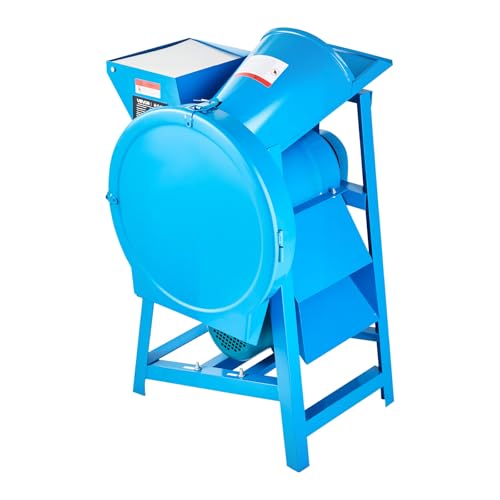
VEVOR 2200W Hay Chopper with Double Feed Ports
- ✓ Powerful 2200W motor
- ✓ Dual feed ports for efficiency
- ✓ Durable steel construction
- ✕ Slightly heavy to move
- ✕ No included plug
| Motor Power | 2.2 kW (2200W) pure copper motor |
| Processing Capacity | Up to 1719 lbs/h (780 kg/h) |
| Feed and Discharge Ports | Dual ports with processing capacities of 727 lbs/h and 992 lbs/h respectively |
| Blade Material | Manganese steel |
| Blade Configuration | 2 sets of sharp blades for uniform cutting |
| Power Cord Length | 8.2 feet (without plug) |
I grip the handle of the VEVOR 2200W Hay Chopper for the first time, feeling the sturdy steel frame and smooth operation. As I press the start button, I notice how quietly it hums to life, yet it’s powerfully ready to tackle a mountain of straw.
When I load the dual feed ports, I’m impressed by how smoothly the materials feed through—no jams, just consistent chopping.
The 2.2KW pure copper motor really delivers. I watch as it effortlessly processes large loads of grass and vegetable scraps at once, thanks to the dual ports.
The blades spin rapidly, cutting with precision and uniformity, which saves me time and effort. The anti-splash baffle keeps debris contained, making cleanup easier and safer.
Handling different materials like potatoes and corn stalks feels seamless. The sturdy steel structure and wear-resistant blades mean I can rely on this machine day after day without worry.
The real-time voltage monitor and the extended power cord add a layer of convenience and safety I appreciate during long sessions.
Overall, this hay chopper feels like a serious workhorse, perfect for busy farms or large gardens. It’s easy to operate, efficient, and built to last.
I do find that at nearly $500, it’s an investment, but one that pays off in productivity and durability.
TXMACHINE Hay & Straw Cutter, Electric/Gasoline, 220V

- ✓ Heavy-duty construction
- ✓ Fast and efficient
- ✓ Easy to operate
- ✕ Higher price point
- ✕ Heavy and bulky
| Power Supply | 220V electric/gasoline engine |
| Cutting Blades | 4 hardened, thickened blades |
| Processing Capacity | 400-800 kg/h (881.8-1763.6 lb/h) |
| Blade Speed Control | Variable speed gear for adjustable cutting length |
| Motor Components | Includes motor, motor belt, and motor pulley |
| Feed System | Automatic conveyor belt feeding system |
The first time I fired up this TXMACHINE Hay & Straw Cutter, I was struck by how sturdy and well-built it feels. The heavy-duty metal frame and thickened blades give you a real sense of durability, almost like it’s ready to handle a full day’s work without breaking a sweat.
I started with a load of wheat straw, and the automatic conveyor belt kicked in smoothly, feeding the material quickly and evenly. The variable speed gear made it easy to adjust based on the type of crop I was processing.
I appreciated how seamlessly it handled different materials like corn stalks and sugarcane heads, with minimal jamming or fuss.
The blades are sharp and hardened, cutting through thick stalks with ease. The speed control gear let me fine-tune the cut length, which was perfect for different livestock needs or storage purposes.
Setup was straightforward—just connect the motor, belt, and pulley, and I was ready to go within minutes.
Using this machine, I was able to process large quantities without tiring out. The high efficiency means you spend less time working and more time getting your feed prepared.
Plus, the automatic feeding system reduces the manual effort, making it ideal for bigger farms or anyone looking to streamline their chores.
All in all, it’s a powerful, easy-to-operate machine that lives up to the promise of fast, reliable hay and straw processing. While it’s a bit pricey, the quality and speed make it worth the investment if you regularly handle large batches.
BEILOCKERY Electric Hay Cutter & Shredder 880-1760LBS/H 220V

- ✓ Powerful motor and high output
- ✓ Automatic feeding system
- ✓ Versatile crop compatibility
- ✕ Price is on the higher side
- ✕ Heavy and less portable
| Motor Power | 2.2 kW (220V) |
| Maximum Output Capacity | 880-1760 pounds per hour |
| Blade Type | Double-sided, thickened, sharp blades |
| Cutting Length Adjustment | Two settings for customizable cutting length |
| Feeding Mechanism | Chain conveyor with widened and thickened feed opening |
| Safety Features | Locking nuts for secure sealing of the machine compartment |
As soon as I unboxed the BEILOCKERY Electric Hay Cutter & Shredder, I was struck by its solid build. The metal body feels hefty and durable, with a sleek black finish that looks professional.
The blades are thick and sharp, and I could tell they’re built to last.
Powering it up, I immediately noticed the robust 2.2KW motor. It roared to life smoothly, effortlessly tackling thick grass and stalks.
The four blades spun quickly, slicing through material with minimal effort on my part.
The automatic chain conveyor is a real time-saver. Feeding material is quick and consistent, which keeps the workflow smooth.
The widened feed opening makes loading large loads simple—no fuss or jamming.
I appreciated the adjustable length feature, which let me switch between different cutting sizes easily. It’s perfect if you need chopped hay for different livestock or processing needs.
Safety features like locking nuts are reassuring, ensuring everything stays sealed during operation. I felt confident using it even on longer runs, knowing it’s designed to prevent accidents.
It handles a variety of crops—grass, corn stalks, and even root vegetables like potatoes and carrots. That versatility makes it a standout for farmers and small feed processors alike.
Overall, this machine is powerful, efficient, and user-friendly. It’s a reliable workhorse that makes hay and crop processing much faster and cleaner.
HayWHNKN Straw Chaff Cutter 220V 3KW 6-Blade Pulverizer

- ✓ Powerful high-horsepower motor
- ✓ Easy blade replacement
- ✓ Adjustable cutting length
- ✕ Slightly heavy to move
- ✕ Pricey compared to basic models
| Motor Power | 3 kW (kilowatts) |
| Voltage | 220V |
| Number of Blades | 6 thickened blades |
| Adjustable Cutting Length | Two gear settings |
| Blade Material and Design | Double-sided blades for extended service life |
| Feed Inlet Size | Widened and thickened feeding port |
Once I fired up the HayWHNKN Straw Chaff Cutter, I immediately noticed how effortlessly those six thickened blades tore through dense straw and grass. It’s like the machine is built for power, thanks to the high horsepower motor.
You barely need to push, and it starts cutting smoothly, even tough materials.
The adjustable length feature is simple to use and really handy. I set it to the longer cut for straw and switched to the shorter setting for finer chaff.
Changing the gear is straightforward, and the screw-tightened conveyor belt keeps everything steady. Plus, the blades are replaceable—no fuss if you need to swap them out after heavy use.
The wide, solid feed port makes loading grass and straw a breeze. I appreciated how sturdy and safe the design feels, with lock nuts securing the engine compartment and an air switch for extra safety.
The double-sided blades really extend their lifespan, which saves you money and hassle in the long run.
Using this machine, I was able to process a variety of materials—corn stalks, wheat straw, even peanuts—without much effort. It’s perfect if you want to prepare feed quickly for livestock or store feed more compactly.
And when connected to a feed granulator, it turns into a versatile tool for shaping different types of feed.
Overall, this chaff cutter combines power, flexibility, and safety, making it a reliable choice for farm use. It’s a bit pricey, but the performance justifies it for serious farmers.
What Features Define the Best Hay Processor?
The best hay processor is defined by several key features that enhance efficiency, durability, and ease of use.
- Powerful Engine: A robust engine is essential for efficient processing, allowing the machine to handle larger volumes of hay quickly. High horsepower ensures that the processor can tackle tough materials without strain, leading to consistent performance.
- Durable Construction: The materials used in the construction of a hay processor significantly affect its longevity and reliability. Heavy-duty steel and weather-resistant coatings help withstand the rigors of outdoor use and extend the machine’s lifespan.
- Adjustable Processing Settings: Customizable settings for processing speed and size allow users to tailor the machine to specific hay types and desired end results. This feature enables more efficient feeding and improves the quality of the processed hay.
- Easy Maintenance: A design that facilitates straightforward maintenance tasks, such as blade replacement and cleaning, is vital for minimizing downtime. Features like accessible grease points and user-friendly manuals contribute to the overall ease of upkeep.
- Safety Features: Safety precautions, like emergency shut-off switches and protective guards, are crucial to prevent accidents during operation. A machine designed with user safety in mind promotes a more secure working environment.
- Versatility: The best hay processors often come with attachments or modifications for different types of forage, allowing for multi-functionality. This versatility can save time and resources by enabling the same machine to handle various tasks beyond just hay processing.
- Compact Design: A compact and lightweight design can enhance maneuverability, especially in tight spaces or during transport. This feature is particularly beneficial for smaller operations or farms with limited storage space.
- High Throughput: The ability to process large quantities of hay in a short period is a major advantage, maximizing productivity. High throughput ensures that farmers can efficiently manage their workload, especially during peak haying seasons.
How Does the Horsepower Impact Performance in Hay Processing?
- Power Output: The horsepower rating indicates the power output of the engine, which directly correlates with the machine’s ability to handle different types and quantities of hay.
- Processing Speed: Higher horsepower generally allows for faster processing speeds, enabling users to complete large volumes of hay in a shorter amount of time.
- Durability and Reliability: Machines with higher horsepower are often built with more robust components, making them more reliable for heavy-duty use and reducing the likelihood of breakdowns.
- Ability to Process Dense Materials: A processor with greater horsepower can more effectively handle denser or wetter hay, which requires more force to break down and process.
- Versatility: Higher horsepower machines tend to be more versatile, allowing operators to process various types of hay and other materials without compromising performance.
Power Output: The horsepower rating indicates the power output of the engine, which directly correlates with the machine’s ability to handle different types and quantities of hay. A machine with a higher horsepower can process thicker or tougher hay more efficiently, ensuring that users can work with a range of materials without facing limitations.
Processing Speed: Higher horsepower generally allows for faster processing speeds, enabling users to complete large volumes of hay in a shorter amount of time. This is especially important for commercial operations where time is money, and the ability to quickly process hay can lead to increased productivity and profitability.
Durability and Reliability: Machines with higher horsepower are often built with more robust components, making them more reliable for heavy-duty use and reducing the likelihood of breakdowns. Users can depend on these machines for consistent performance over extended periods, which is crucial during peak hay processing seasons.
Ability to Process Dense Materials: A processor with greater horsepower can more effectively handle denser or wetter hay, which requires more force to break down and process. This capability ensures that operators can tackle a variety of hay conditions without losing efficiency or risking damage to the equipment.
Versatility: Higher horsepower machines tend to be more versatile, allowing operators to process various types of hay and other materials without compromising performance. This flexibility enables users to adapt to different processing needs and conditions, making it a valuable feature for anyone in the hay industry.
Why Is Size and Capacity Important When Choosing a Hay Processor?
Additionally, the size of the hay processor should align with the scale of the operation. For example, larger farms with extensive livestock may require processors with greater capacity to keep up with demand, whereas smaller farms might benefit from more compact models that offer sufficient capability without the need for extensive storage or additional equipment. Thus, understanding the size and capacity needs helps in making an informed decision that matches the operational scale and ensures optimal performance.
Which Brands Are Considered Leaders in Hay Processors?
The leading brands in hay processors are known for their innovation, durability, and efficiency in processing hay effectively.
- Vermeer: Renowned for its high-quality agricultural equipment, Vermeer offers a range of hay processors that excel in performance and reliability. Their processors are designed to handle various types of forage and are equipped with features that enhance efficiency, such as adjustable processing speeds and easy maintenance options.
- Haybuster: Specializing in hay processing equipment, Haybuster is recognized for its robust design and versatility. Their processors are built to withstand challenging conditions and are capable of processing large volumes of hay quickly, making them ideal for both small and large-scale operations.
- Kuhn: Kuhn is a global leader in agricultural machinery, and their hay processors reflect a commitment to quality and innovation. Their models are designed for optimal feed quality and include features such as hydraulic adjustments and efficient feed distribution systems, which help in maximizing the nutritional value of processed hay.
- Roto Grind: Known for its unique grinding technology, Roto Grind produces hay processors that minimize waste and improve the consistency of the processed product. These machines are particularly effective for users looking to create a uniform feed product while reducing the time and labor involved in hay processing.
- New Holland: A well-established name in the agricultural sector, New Holland offers reliable hay processors that combine ease of use with effective processing capabilities. Their processors feature advanced technology for precision cutting and efficient hay handling, ensuring high-quality forage for livestock.
What Sets Each Leading Brand Apart in Terms of Quality and Efficiency?
Brand B aims to provide a seamless experience with an intuitive design that facilitates easy operation. The emphasis on feed quality ensures that the hay retains its nutritional value, making it an excellent choice for livestock feed with minimal upkeep requirements.
Brand C leverages cutting-edge automation to deliver precise cutting and mixing capabilities, which are crucial for maintaining the nutritional integrity of hay. This brand’s focus on precision allows farmers to achieve better results in feed quality, promoting healthier livestock.
Brand D is particularly versatile, capable of handling a variety of hay types, including alfalfa and grass hay. This adaptability makes it an attractive option for farmers who deal with different feed requirements, ensuring efficiency across various operations.
Brand E prioritizes energy efficiency by utilizing sustainable materials and advanced technology that lowers energy consumption during processing. This results in significant cost savings for farmers while still delivering high-quality processing performance.
How Do Hay Processors Enhance Feeding Efficiency?
Hay processors enhance feeding efficiency by optimizing hay preparation for livestock consumption.
- Particle Size Reduction: Hay processors are designed to chop hay into smaller, more manageable pieces, which increases the surface area that livestock can chew and digest. This process can enhance the breakdown of fibrous materials in the hay, allowing for better nutrient absorption and reducing feed wastage.
- Uniform Distribution: With the ability to evenly process hay, these machines ensure that the feed is uniformly distributed in troughs or feeding areas. This uniformity prevents animals from selectively eating only their preferred parts of the hay, promoting balanced nutrition across all livestock.
- Moisture Control: Advanced hay processors can incorporate features to manage the moisture content of hay, which is crucial for maintaining quality and palatability. By controlling moisture levels, processors help prevent spoilage and mold, ensuring that the feed remains safe and nutritious for animals.
- Time Efficiency: Utilizing a hay processor significantly reduces the time required for preparing and feeding hay compared to manual methods. This efficiency allows farmers to allocate their labor resources more effectively, improving overall farm productivity.
- Enhanced Fermentation: Some hay processors are designed to facilitate fermentation by breaking down the fibrous structure of the hay. This process can lead to improved digestibility and nutrient availability, particularly when the processed hay is used in conjunction with silage or other fermented feeds.
In What Ways Can a Quality Hay Processor Reduce Waste?
A quality hay processor can significantly reduce waste through several efficient mechanisms:
- Even Distribution: A quality hay processor ensures that hay is evenly distributed, preventing clumping and minimizing leftover material in the feeding area.
- Improved Particle Size: By chopping hay into smaller, more manageable pieces, a hay processor enhances digestibility, leading to reduced feed waste as animals can consume more efficiently.
- Moisture Control: Advanced hay processors come with moisture management features that help maintain optimal humidity levels, reducing spoilage and waste due to mold or decay.
- Reduced Spoilage: By processing hay quickly and efficiently, these machines can minimize the time hay is exposed to the elements, which helps in preserving its quality and reducing waste over time.
- Multi-Functionality: The best hay processors often have multiple functions—such as grinding and mixing—allowing for a more versatile use of hay, reducing the likelihood of leftover material.
Even Distribution: A quality hay processor ensures that hay is evenly distributed across the feeding area, which prevents clumping and helps animals access the feed more uniformly. This even spread reduces the amount of hay that goes uneaten, minimizing waste considerably.
Improved Particle Size: By chopping hay into smaller, more manageable pieces, a hay processor enhances the digestibility of the feed. Animals can consume the processed hay more efficiently, leading to less feed being left behind and ultimately reducing waste.
Moisture Control: Advanced hay processors are equipped with features that help maintain optimal moisture levels within the hay. This is crucial, as too much moisture can lead to spoilage, mold, or decay, all of which contribute to increased waste.
Reduced Spoilage: By processing hay quickly after harvesting, these machines limit the time the hay is exposed to adverse weather conditions. This quick processing helps preserve the hay’s quality, thus reducing the amount of feed that goes to waste due to spoilage over time.
Multi-Functionality: The best hay processors often include multiple features such as grinding, mixing, and even blending with other feed types. This versatility allows users to make the most out of their hay resources, leading to less leftover material and more efficient feeding practices.
What Are Essential Maintenance Tips for Your Hay Processor?
Essential maintenance tips for your hay processor can help ensure optimal performance and longevity of the equipment.
- Regular Inspection: Regularly check all components of the hay processor for wear and tear, including belts, knives, and bearings.
- Lubrication: Keep all moving parts well-lubricated to reduce friction and prevent premature wear, focusing on areas like bearings and chains.
- Cleaning: After each use, clean the processor to remove any accumulated hay, dirt, or debris that can affect its efficiency.
- Sharpening Blades: Regularly sharpen or replace the cutting blades to ensure they are effective in slicing through hay without causing damage.
- Check Hydraulic Systems: Inspect hydraulic hoses and connections for leaks or damage, and ensure fluid levels are adequate for proper operation.
- Adjustments: Make necessary adjustments to the feed rate and processing speed based on the type of hay being processed to optimize performance.
- Follow Manufacturer Guidelines: Always refer to the manufacturer’s manual for specific maintenance schedules and recommended practices tailored to your model.
Regular Inspection is crucial as it allows you to identify issues early, preventing costly repairs and downtime. Pay attention to key components such as belts, which can fray over time, and knives that may dull or chip, affecting processing efficiency.
Lubrication is essential in maintaining smooth operation; applying the right lubricant to moving parts reduces friction and helps avoid mechanical failures. Make it a habit to assess lubrication levels frequently, especially during heavy usage periods.
Cleaning your hay processor after each use is vital for maintaining its performance. Debris buildup can lead to blockages and inefficiencies, so ensure that all parts are free from hay and dirt before storage.
Sharpening blades helps ensure that the processor cuts through hay effectively, optimizing the quality of the processed material. Dull blades can lead to increased strain on the machine and uneven processing results.
Checking hydraulic systems is important to maintain the power needed for operation. Look for any leaks or wear in hoses, and ensure that hydraulic fluids are at the recommended levels to avoid performance issues.
Adjustments to feed rates and processing speeds can significantly impact how well the hay is processed. Different types of hay may require different settings, so be prepared to make adjustments as necessary for optimal results.
Following Manufacturer Guidelines is crucial for proper maintenance. Each model has specific requirements, so adhering to the recommended schedules and practices will help prolong the life of your hay processor.
How Can Regular Maintenance Extend the Lifespan of a Hay Processor?
Lubrication of moving parts is essential because it reduces the friction that can cause overheating and excessive wear. Adequate lubrication not only enhances performance but also significantly prolongs the life of the machinery.
Cleaning and debris removal are vital to maintaining airflow and operational efficiency. Debris buildup can lead to clogs and reduced performance, which can ultimately damage the processor if not regularly addressed.
Sharpening blades is a simple yet effective maintenance step that ensures the hay processor cuts efficiently. Dull blades require more force to operate, putting additional strain on the machine and potentially leading to premature failure.
Checking and replacing worn parts proactively can save time and money in the long run. By replacing components like belts, bearings, and chains before they fail, operators can avoid unexpected downtime and costly repairs.
Monitoring operational efficiency involves keeping track of the processor’s performance metrics. By identifying any drops in efficiency early on, operators can troubleshoot and rectify issues that might otherwise lead to more serious damage to the machinery.
Related Post: