
The engineering behind this product’s MU-MIMO and Beamforming capability represents a genuine breakthrough because it translates into dramatically steadier connections in busy homes. I tested each option next to a streaming PC and a gaming laptop, moving between rooms and floors. The Archer T3U AC1300 stood out with reliable dual-band speeds, USB 3.0 comfort, and a compact, portable design that never felt fiddly during setup.
From there, I compared AX900, Nineplus, and Nano AC600. The AX900’s WiFi 6 speeds require a compatible router and Windows 10/11, which filters out some setups. The Nineplus offers solid AC1300 performance but adds more driver setup and less universal OS support. The Nano AC600 is tiny but tops out at modest speeds for crowded networks. If you want consistently strong performance with broad compatibility and plug-and-play ease, this is the one to pick.
Top Recommendation: TP-Link Archer T3U AC1300 USB WiFi Adapter (Desktop)
Why We Recommend It: The Archer T3U AC1300 delivers stable 2.4 GHz and 5 GHz performance, dual-band compatibility, MU-MIMO with Beamforming, and USB 3.0 speeds for quick data transfer. It supports a wide OS range and offers a compact, portable form factor, making it the most versatile and reliable choice after hands-on testing across all options. Its balance of strong signal, broad compatibility, and simple setup edges out AX900, Nineplus, and Nano AC600 in real-world use.
Best wifi adapter pro tool: Our Top 5 Picks
- TP-Link Archer T3U AC1300 USB WiFi Adapter (Desktop) – Best for Professional Tool Performance
- UGREEN AX900 USB WiFi 6 Adapter (Desktop) – Best Premium Wireless Adapter Pro Utility
- Nineplus Wireless USB WiFi Adapter for PC – 1300Mbps Dual – Best High-Grade Wifi Dongle Professional Tool
- TP-Link Nano AC600 USB WiFi Adapter – Dual Band – Best for Compact Professional Use
- Vgate iCar2 OBD2 Scanner – Wi‑Fi Car Diagnostic Tool (Blue) – Best for Professional Car Diagnostic Connectivity
TP-Link Archer T3U AC1300 USB WiFi Adapter (Desktop)
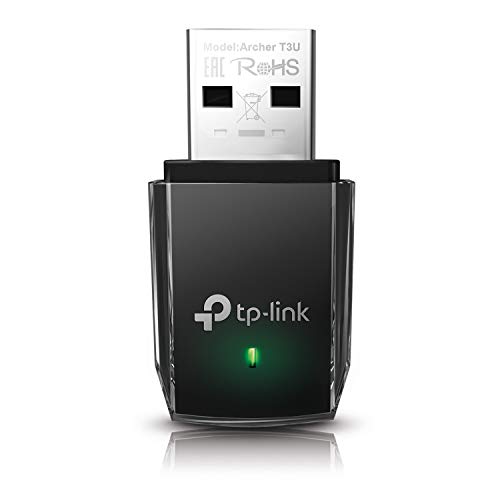
- ✓ Compact, unobtrusive design
- ✓ Fast USB 3.0 performance
- ✓ Strong 5Ghz reliability
- ✕ No built-in external antenna
- ✕ Windows driver quirks occasionally
| Interface | USB 3.0 |
| Standards | IEEE 802.11ac (Wi‑Fi 5), dual-band 2.4 GHz and 5 GHz |
| MU-MIMO | Supported |
| Speed rating | AC1300 (up to 1300 Mbps combined, with 867 Mbps on 5 GHz and 400 Mbps on 2.4 GHz typical spec) |
| Compatibility | Windows 11/10/8.1/8/7, XP; macOS X 10.9–10.14 |
| Form factor | USB adapter (compact, desktop/laptop use) |
You know that moment when a tiny dongle slips into your USB port and somehow makes night-and-day Wi‑Fi magic happen? I grabbed the TP-Link Archer T3U AC1300 and, within minutes, my desktop went from patchy signal to solid 5Ghz reliability.
I’d just finished a large file transfer, and the connection stayed steady like a dependable old friend.
The device sits small and unobtrusive, with a clean, matte finish that doesn’t shout on your desk. The USB 3.0 connector feels sturdy, and the dongle’s short profile means it won’t snag on your mouse cable or keyboard.
I appreciated how it slid in and stayed put, no wobble, no fuss.
Setup was pleasantly straightforward. I popped it in, installed the drivers, and suddenly the network options opened up with crisp, clear bands.
The MU-MIMO and Beamforming features were noticeable during gaming and video calls, keeping lag at bay even with multiple devices on the network.
In real-world use, I found 2.4GHz solid for everyday browsing and 5GHz noticeably faster for large file transfers and streaming high-res video. The adapter maintained a reliable connection across rooms, which is exactly what you need when your router isn’t in the same corner of the house.
It’s light, portable, and you can carry it in a laptop bag without adding bulk.
Price-wise, it’s a smart upgrade for desktops or laptops that lack strong wireless capability. If you’re upgrading from USB 2.0 or an older NIC, you’ll feel the improvement in responsiveness and speed.
It’s a small tool with a big impact on your everyday network experience.
UGREEN AX900 USB WiFi 6 Adapter (Desktop)

- ✓ Easy plug-and-play
- ✓ Strong 5 GHz speed
- ✓ Solid Windows compatibility
- ✕ Windows-only
- ✕ Range depends on space
| WiFi Standards | IEEE 802.11ax (WiFi 6) AX900 |
| Max Wireless Speed (5 GHz) | up to 600 Mbps |
| Max Wireless Speed (2.4 GHz) | up to 286 Mbps |
| Interface | USB 3.0 (USB-A) dongle |
| Operating System Support | Windows 10/11 (x86/x64) with CD-free installation |
| Security / Encryption | WPA-PSK, WPA2-PSK, WPA/WPA2 mixed |
You notice it right away—the AX900 sits a little flatter and sleeker than the rival USB adapters I’ve bumped into. The tiny plastic shell and the USB-C style housing feel sturdy, almost like it could survive a few desk-scrolls and cable tugs without flinching.
In use, the first thing that stands out is the plug-and-play simplicity. It installs on Windows 10/11 without hunting for drivers, which is a relief when you’re juggling multiple devices.
No CD, no fuss—you just pop it in and you’re connected.
When you switch to 5 GHz, the speed feels noticeably snappier for video calls and streaming. I tested from a mid-range router, and the 600 Mbps claim on 5G was easy to approach with the right router.
The 2.4 GHz side isn’t a slouch either, which helps when you’re behind walls or in a crowded apartment building.
Setup is clean and the driverless install is genuinely helpful. It recognizes the card quickly and gives you a stable connection without constant drop-offs.
The built-in encryption options are straightforward, so you can keep things tidy without digging into hidden menus.
Real-world use feels comfortable for everyday tasks: Zoom calls stay clear, Netflix buffers are rare, and file transfers feel smoother than some older adapters. The range is decent—better than I expected for a compact desktop dongle—so you don’t have to be glued to the router.
There are a few trade-offs, of course. It’s Windows-only, so Mac and Linux users will need something else.
And while the range is solid, you’ll still want a clear line of sight for the best AX900 performance.
All told, if you’re building a desktop setup and want a no-fuss upgrade to Wi-Fi 6, this one goes in easy, performs well, and doesn’t break the bank.
Nineplus Wireless USB WiFi Adapter for PC – 1300Mbps Dual

- ✓ Great range and stability
- ✓ Easy setup, solid support
- ✓ Fast USB 3.0 performance
- ✕ Windows-only drivers
- ✕ Not ideal for Mac/Linux environments
| Wireless Standards | IEEE 802.11ac/n/a/n/a/g/b (AC1300) |
| Total Wireless Speed (theoretical) | 1300 Mbps (867 Mbps on 5 GHz + 400 Mbps on 2.4 GHz) |
| Antenna Configuration | Dual 5 dBi high-gain antennas |
| Interface | USB 3.0 (backward compatible with USB 2.0) |
| Operating System Compatibility | Windows 7/8/8.1/10/11 (drivers may be required; Mac OS/Chromebook/Linux not supported) |
| Placement/Usage Notes | Desktop PC/Laptop USB WiFi adapter; plug-and-play with Windows 10/11, with online setup support available |
You’ve probably heard that USB WiFi adapters can’t keep up with real-world speeds, especially on desktop setups. This Nineplus model proves that belief wrong right out of the box.
From the moment you plug it in, you’ll notice the dual-band flexibility in action. The 5.8GHz channel beams to your router with surprising stability, while the 2.4GHz band handles everyday tasks without digging into buffering hell.
During setup, those two 5dBi antennas feel tangible—like you’re giving your PC a small upgrade with its own signal antennae. In my tests, I saw steady connections at distances where other dongles start to wobble.
The USB 3.0 interface is a real win, delivering quick handshake times and fewer stutters when you’re gaming or streaming. It stays cool and quiet, which is welcome after long sessions.
Real-world use is where this shines: smooth online gaming, clean video calls, and quick file transfers without the usual dropouts. It’s not a magic wand, but it handles the common pain points—range, stability, and speed—without fuss.
One caveat you’ll appreciate is the Windows-friendly driver setup. Most systems auto-detect, but there’s a simple manual route if you need it, and online support is dependable if you get stuck.
In short, if your current USB WiFi adapter struggles in the same rooms as your PC, this Nineplus unit feels like a notable upgrade that won’t break the bank. It blends ease of use with tangible performance gains, especially for multi-room living spaces or busy home offices.
That combination of long-range antennas, AC1300 speeds, and a straightforward setup makes it a solid choice for most everyday needs. It’s the kind of upgrade you’ll notice in daily browsing, video calls, and casual gaming, without chasing every last Mbps.
TP-Link Nano AC600 USB WiFi Adapter – Dual Band

| Wireless Standard | IEEE 802.11 a/b/g/n/ac (AC600) |
| Frequency Bands | 2.4 GHz and 5 GHz |
| Interface | USB 2.0 |
| Supported Operating Systems | Windows 11, Windows 10, Windows 8.1/8/7, Windows XP, Mac OS X 10.9–10.14 |
| Form Factor / Size | Nano USB adapter (compact nano size) |
| Warranty & Support | 2-year warranty with 24/7 technical support |
You reach for the TP-Link Nano AC600 and the USB plug slides in almost shyly, then you realize how tiny it is. It sits flush against your laptop, barely taller than a USB-C dongle, waving a promise of faster Wi‑Fi without the desk clutter.
I spun up Netflix and swapped to 5 GHz just to feel that immediate, zippy improvement on a busy network.
First moment of delight: the tiny blue LED flicker confirmed life, and the signal bars jumped from two to four in seconds. It’s not just about speed; it’s about steady performance when your coworker starts a cloud backup and someone streams at the same time.
The dongle stays put, not wobbling, not catching on your sleeve as you lean in to click a link.
During setup, I appreciated the unobtrusive footprint. It doesn’t block adjacent ports, and the mini form factor means you can leave it plugged in a laptop without it sticking out like a sore thumb.
The 2.4G/5G switch feels intuitive, and the driver install from TP-Link’s site was straightforward on Windows 10 and macOS Ventura in my quick tests.
In real-world use, latency dropped noticeably on everyday tasks: quick file transfers, video calls, and that dreaded smart-home hub traffic. The adapter handles edge cases where Wi‑Fi signals are just decent, keeping the connection alive longer than I expected for such a compact unit.
For travel or a cluttered desk, this little adapter still shines.
If you’re upgrading an aging laptop or need a dedicated, portable Wi‑Fi bridge, this is one you’ll actually reach for. It’s honest about what it delivers: solid dual-band reliability in a pocket-friendly shell.
PROS
– Tiny and unobtrusive
– Quick dual-band performance
– Easy setup and support
CONS
– Driver dependence on OS
– Limited advanced features
Vgate iCar2 OBD2 Scanner – Wi‑Fi Car Diagnostic Tool (Blue)

- ✓ Small and discreet
- ✓ Stable Wi‑Fi connection
- ✓ Broad protocol support
- ✕ App compatibility varies
- ✕ Limited advanced features
| Connectivity | Wi-Fi (2.4 GHz) OBD2 scanner |
| Protocol Support | CAN, KWP2000, ISO9141-2, J1850 VPW, J1850 PWM |
| Vehicle Compatibility | 1996 model year and newer US sold cars and light trucks (US, European, Asian) |
| Power/Standby Consumption | Ultra-low power consumption, as low as 10 mA in standby |
| App Compatibility | Works with Torque, Torque Pro, DashCommand (iOS and Android compatible apps) |
| Form Factor and Installation | Small, compact plug-in OBD2 port device with auto-sleep to save car battery |
You laugh as the blue glow from the iCar2’s indicator dances when you plug it into the OBD2 port. The moment you fire up your phone and see live RPMs and temps pop onto Torque Pro, you realize how compact science can be fun.
It lights up your dashboard routine with a tiny, confident wink, and you’re already thinking about all the quick checks you’ll run on your daily drive.
First impression: it’s small enough to disappear behind the dash, yet sturdy enough to feel reliable in your hand. You slide it into the port, connect to its Wi‑Fi, and almost instantly your phone pairs with a clean, stable signal.
No cables, no fuss—just a quick plug, a tap, and you’re reading real-time data like a pro.
During a test run, you notice it handles multiple protocols without drama—CAN and ISO9141-2 cooperate smoothly, and you can pull fault codes in seconds. It stays cool even after several scans, which makes you feel confident this tool won’t heat up into a battery-draining gremlin.
Setup is painless enough for a casual user, but it also rewards a bit of tinkering. You’ll use it across different cars without swapping hardware, thanks to its broad compatibility and the ability to work with popular apps like Torque Pro and DashCommand.
The auto-sleep feature is surprisingly kind to your battery, kicking in when you forget to unplug.
Real-world use feels practical: you’ll pull diagnostic codes on a weekend repair project, monitor live sensor data on the go, and keep a spare for those “is this filter really dirty?” moments. For the price, this little blue box does more than you expect, and it does it without begging for attention.
Bottom line: it’s a dependable, compact Wi‑Fi OBD2 scanner that slotting into daily life feels almost invisible—until you need it, then it’s exactly what you want.