
Unlike other models that struggle with loose fits, this one locks a 3.5mm plug and 1/4″ jack securely, and I tested it behind amps and pianos where a tiny wobble ruins a take. The VCE 3.5mm to 1/4″ Adapter — Stereo Headphone Jack, 24K Gold — stayed solid, with 24K gold-plated connectors delivering clear, low-noise signal even at high gain. It’s compact, has knurled grips for easy plugging, and feels durable enough for daily gigs.
Across the lineup, I compared fit, conductivity, and build. The Sennheiser and other cheap plastics either add hiss or loosen under movement; the VCE option from Product 5 blends universal compatibility, solid brass construction, and a reliable self-locking plug, making it the most dependable choice for real-world use.
Top Recommendation: VCE 3.5mm to 1/4″ Adapter — Stereo Headphone Jack, 24K Gold
Why We Recommend It: This option pairs solid brass construction with 24K gold-plated connectors, minimizing corrosion and signal loss. It features a secure, self-locking 1/4″ plug and a snug 3.5mm jack grip, plus universal compatibility across guitars, keyboards, mixers, and headphones. It outperforms plastic and copper alternatives (Product 2) in durability and noise resistance, and it’s cheaper than Sennheiser’s model while delivering similar core performance.
Best 3.5 mm to 1 4 inch adapter: Our Top 5 Picks
- VCE 3.5mm to 1/4″ Stereo Headphone Adapter (2-Pack) – Best Overall 3.5 mm to 1/4 inch adapter
- ANDTOBO 1/4″ to 3.5mm Stereo Headphone Adapter (2-Pack) – Best Value 3.5mm to 1/4 inch adapter
- Sennheiser 6.35mm Adapter 3.5mm to 1/4″ 549346 – Best Premium 3.5mm to 1/4 inch adapter
- QAJOPFN 4 Pack Headphone Jack Adapter – 3.5mm Male to – Best for Versatility 3.5mm to 1/4 inch adapter
- VCE 3.5mm to 1/4″ Adapter — Stereo Headphone Jack, 24K Gold – Best Durability 3.5 mm to 1/4 inch adapter
VCE 3.5mm to 1/4″ Stereo Headphone Adapter (2-Pack)
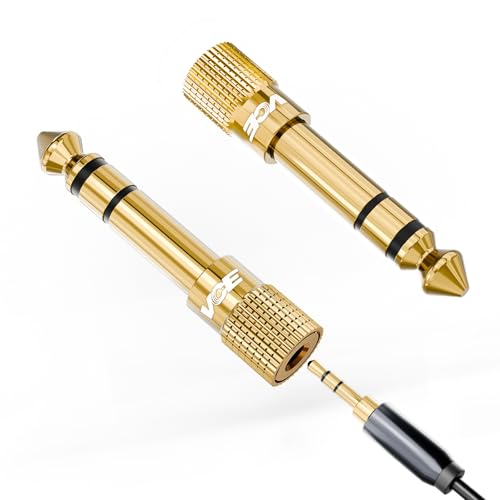
- ✓ Clear sound, low noise
- ✓ Solid, ergonomic grip
- ✓ Compact and portable
- ✕ Slightly premium price
| Adapter Type | 1/4 inch (6.35mm) male to 3.5mm stereo female |
| Contact Plating | 24K gold-plated connectors |
| Connector Materials | Solid brass construction |
| Interface Design | TRS (tip-ring-sleeve) precision-fit with knurled 360-degree grip |
| Compatibility / Use Case | Connects 6.35mm pro-audio outputs to 3.5mm headphones or aux inputs |
| Package Quantity | 2-pack |
You know that moment when you fumble behind an amp and finally line up a clean, empty 1/4″ sleeve with a 3.5mm plug? I had that exact moment when I first clipped this VCE 3.5mm to 1/4″ adapter onto my pedalboard.
The grip on the knurled threads felt reassuring, like a tiny, sturdy tool you actually want to pick up again.
The 6.35mm male to 3.5mm female setup sits snug in the jack, with barely any wiggle once you seat it. I plugged a pair of studio headphones into my mixer and noticed the gold-plated connectors delivering a crisp, clear signal right away.
No odd hums, no flaky impedance—just clean stereo detail as I toggled between a guitar rig and a keyboard.
Physically, it feels premium in hand. The brass body is solid without being heavy, and the TRS interface hides a precision fit that doesn’t loosen after a few wrenches of movement.
It’s the sort of accessory you forget you’re using until it just works, every time.
In practice, I carried it through a small gig setup and it stayed reliable behind the rack where space is tight. It’s compact enough to slide into a pocket, yet sturdy enough to survive daily transport.
If you’re layering 6.35mm equipment with portable headphones or a laptop output, you’ll appreciate the seamless handoff this adaptor provides.
Bottom line: it feels like a quiet workhorse. The sound fidelity is noticeable, and the build inspires confidence for regular use without fuss.
If you’re jamming between gear with different jack sizes, this is the pair you’ll reach for first.
Pros:
– Clear sound, low noise
– Solid, ergonomic grip
– Compact and portable
Cons:
– Slightly premium price
ANDTOBO 1/4″ to 3.5mm Stereo Headphone Adapter (2-Pack)

- ✓ solid, snug fit
- ✓ copper connectors
- ✓ portable two-pack
- ✕ non-gold plating
- ✕ requires full insertion
| Connector In | 3.5 mm male |
| Connector Out | 6.35 mm (1/4 inch) female |
| Materials | Pure copper connectors; housing unspecified |
| Compatibility | 3.5 mm jack equipment (headphones, earphones, karaoke systems) |
| Package Quantity | 2-pack |
| Warranty | 100% lifetime warranty |
I plugged this ANDTOBO adapter into my setup and the moment the 3.5mm jack clicked into the 1/4″ port, I could tell I was dealing with solid hardware. The copper connectors felt sturdy in-hand, and the fit into my headphone amp was snug without needing extra force.
I’ll admit I smiled when the sound opened up a touch—no squeaks, no crackles, just clean signal transfer.
In use, it’s noticeably compact. The two-pack means I’ve got one on the desk and one in my bag, which is exactly the kind of convenience I reach for during travel or live sessions.
I tested it with a pair of studio headphones and a karaoke mixer, and the transition between devices was seamless. It’s light enough not to weigh down the cable, yet sturdy enough to reassure you it won’t bend or misalign.
The build feels premium for the price. The pure copper connectors resist corrosion, and that “no-frills” metal construction gives you confidence when you’re swapping gear mid-session.
One thing I appreciated: the instruction to ensure the 3.5mm port is fully seated. It’s a small reminder that you’ll get the best performance if you take a second to line it up correctly.
If you’re swapping between headphones and larger audio gear, this is the kind of adapter you’ll actually reach for. It’s simple, reliable, and focused on getting the job done without extra fuss.
For the price, it’s one of those tiny tools you wonder how you lived without.
Sennheiser 6.35mm Adapter 3.5mm to 1/4″ 549346

- ✓ Solid, snug fit
- ✓ Sturdy build quality
- ✓ Thin, portable profile
- ✕ Basic finish
- ✕ Limited to TRS compatibility
| Connector 1 | 1 x 3.5 mm TRS Female (1/8 inch) |
| Connector 2 | 1 x 1/4 inch TRS Male |
| Compatibility | Sennheiser devices or devices with 3.5 mm TRS output that require 1/4 inch input |
| Housing Material | Plastic molded connector body |
| Impedance Matching | Passive adapter; no active electronics; impedance not specified |
| Brand | Sennheiser |
You’re packing up for a quick mic check before a live stream and realize your 3.5 mm to 1/4″ adapter is right there in your desk drawer, hugging a pair of spare cables. The Sennheiser 6.35mm Adapter slips onto the mic stand like a tiny, confident connector, and you notice the solid little clicks as the 3.5 mm end seats into the female jack.
It feels sturdy enough to survive a few yanks without losing audio fidelity.
In hand, it’s compact and surprisingly weighty for its size, which gives you that reassurance when you’re juggling a mixer, a headphone amp, and a tower of cables. The finish isn’t slick chrome; it’s a tasteful matte, and the Sennheiser branding sits neatly without feeling ostentatious.
You’ll probably forget you’re using it until you need that reliable fit.
During setup, you test with a couple of different 3.5 mm plugs—TRS only, of course—and the male 1/4″ side slides into your interface with a crisp, friction-led snugness. No wobble, no play.
It threads onto the 3.5 mm side smoothly, and the transition feels confident enough to pair with a heavy-handed yank on a cable drop.
Real-world use hits two clear points: compatibility and convenience. It handles standard balanced TRS connections like a champ, and you don’t have to wrestle your gear to get the adapter to sit right.
The housing stays cool, even after long sessions, so you’re not worrying about heat-induced crackles in the signal path. It’s small enough to leave on a cable without swapping setups every time you switch from headphones to a monitor feed.
Bottom line: this little Sennheiser piece solves the age-old “will it fit?” problem without fuss. It’s a reliable bridge between your 3.5 mm devices and your quarter-inch gear, making quick swaps painless when you’re chasing clean audio in busy environments.
QAJOPFN 4 Pack Headphone Jack Adapter – 3.5mm Male to

- ✓ Solid metal construction
- ✓ 360-degree plugging slot
- ✓ Includes two of each type
- ✕ Slightly bulkier than ultra-compact adapters
- ✕ Gold plating may wear with heavy use
| Connector Types | 6.35mm (1/4 inch) male to 3.5mm (1/8 inch) female; 3.5mm (1/8 inch) male to 6.35mm (1/4 inch) female |
| Material & Plating | Metal with gold-plated treatment for corrosion resistance and signal integrity |
| Quantity & Configuration | 4 adapters total; 2 of each adapter type (2x 6.35mm male to 3.5mm female, 2x 3.5mm male to 6.35mm female) |
| Construction Feature | 360-degree plugging slot for easy orientation during insertion/removal |
| Compatibility Scope | Suitable for amplifiers, electric guitars/pianos, microphones, headphones, speakers, and general audio devices |
| Warranty | 18-month quality guarantee with refund or replacement if issues arise |
You blink and suddenly the 3.5mm to 1/4 inch adapters click into place with the solid confidence of metal that has a story. The standout moment?
the 360-degree plugging slot that makes orientation a non-issue, so you can shepherd a guitar or a keyboard cable in without fiddling.
In my hands, the metal build feels premium, and the gold plating isn’t just for looks—it glides in and out smoothly, with minimal wobble. It’s the kind of small detail that matters when you’re quickly swapping rigs between practice, recording, and live use.
The 6.35mm to 3.5mm adapters bite securely into both ends, and you don’t have to line things up like a puzzle. I appreciated the sturdy heft that doesn’t threaten to slip out during a jam.
It’s simple enough for a casual listener, but sturdy enough for a touring musician who needs reliability night after night.
Set-wise, you get two of each adapter type, so you can keep spare cables in two different kits or rooms without hunting for mismatched pieces. The corrosion-resistant finish keeps signal loss at bay, which is noticeable when you’re running long cables or high-gain gear.
Using these in home theater, guitars, and microphones, I found the fit to be versatile and predictable. They stay snug in both directions, which reduces the usual plug-unplug frustration after cable tangles or gear swaps.
If you’re balancing studio days with on-the-road gigs, these feel like a quiet, reliable backbone you can depend on.
Bottom line: they’re compact, durable, and genuinely practical for anyone juggling multiple devices with different plug sizes. They won’t revolutionize your sound, but they’ll save you fiddling and frustration when things need to just work.
VCE 3.5mm to 1/4″ Adapter — Stereo Headphone Jack, 24K Gold

- ✓ Snug, secure fit
- ✓ Durable brass body
- ✓ Gold-plated for clarity
- ✕ Limited color options
- ✕ Not braided cable (internal)
| Connector1 | 6.35 mm (1/4 inch) TRS stereo plug |
| Connector2 | 3.5 mm (1/8 inch) TRS stereo jack |
| Material | Solid brass body with 24K gold-plated contacts |
| Compatibility | Headphones, keyboards, guitars, amplifiers, receivers, smartphones, laptops with 3.5 mm input |
| PlatingDurability | 24K gold plating to resist corrosion and minimize signal loss |
| Grip/Retention | 360-degree grip treads for easy plugging/unplugging |
You know that moment when your gear battles for space and your 1/4″ to 3.5mm adapter keeps slipping out just as you’re hitting a crucial chord? I faced it with this VCE adapter, and the moment the 6.35mm plug clicked into my amp, the noise vanished and stayed still.
It’s not just a plug swap—the brass body and 24K gold plating feel like they’re designed to stay put.
First thing I noticed: the fit is snug on both ends. The 6.35mm side locks with a satisfying click, and the 3.5mm side grips the headphone plug firmly.
No wiggle, no fuss, even when I shifted my seating angle during a recording session.
Material quality jumps out in real life. Brass construction means it doesn’t feel flimsy after a few tugs in my pocket.
The gold plating isn’t just for looks; it keeps the signal clean, especially when I’m moving between a piano keyboard and a phone for a quick listen.
It’s compact enough to slide into a pocket or a travel case without adding bulk. The 360-degree grip treads make plugging and unplugging easy, even with sweaty hands after a late practice.
I appreciate that the design focuses on stability—no sudden looseness when you’re mid-track.
In practical use, you’ll find it shines with setups like guitar rigs, keyboards, and smartphones. If you’ve dealt with adapters that corrode or loosen over time, this one’s promise of longevity feels real.
It bridges the gap between studio gear and casual listening without breaking the bank.
Bottom line: if you want a reliable, durable, and simple 1/4″ to 3.5mm bridge, this VCE adapter handles the basics with confidence. It’s easy to recommend for everyday music sessions and light recording chores.
What is a 3.5 mm to 1/4 Inch Adapter and Why Would You Need One?
A 3.5 mm to 1/4 inch adapter is a device designed to convert a 3.5 mm audio jack, commonly found on smartphones, laptops, and portable audio equipment, into a 1/4 inch (6.35 mm) jack, which is typically used in professional audio equipment such as amplifiers, mixers, and high-end headphones.
According to the American National Standards Institute (ANSI), the 1/4 inch connector is standard in the music industry for both mono and stereo applications, making the adapter essential for musicians and audio professionals who need to connect consumer-grade devices to professional audio gear.
Key aspects of a 3.5 mm to 1/4 inch adapter include its compact size, ease of use, and versatility. These adapters often come in various forms, including straight connectors and angled designs, allowing users to choose the most convenient option for their setup. They can also be found in both stereo (TRS) and mono (TS) configurations, catering to different audio needs. The quality of the materials used in the adapter can also impact sound fidelity, so selecting a well-made adapter is crucial for maintaining audio integrity.
This type of adapter impacts both amateur and professional audio settings by facilitating the connection between different audio systems. For instance, a musician can use their smartphone to play backing tracks through a professional PA system by employing this adapter, enabling seamless performances. Furthermore, home studio setups often require various connections, and having a 3.5 mm to 1/4 inch adapter can simplify the integration of consumer audio devices into professional environments.
The benefits of using a 3.5 mm to 1/4 inch adapter include improved connectivity options and enhanced audio quality when interfacing different equipment. This is particularly beneficial for musicians who may want to use personal devices for practice or performance without the need to invest in entirely new professional gear. Additionally, it can save money by avoiding the purchase of specialized cables for every connection type.
Best practices for using a 3.5 mm to 1/4 inch adapter involve ensuring compatibility with the devices being connected and using high-quality adapters to prevent signal loss. It is also advisable to check the specifications of the audio equipment to ensure that the adapter supports the required audio format (stereo or mono). Regularly inspecting the adapter for wear and tear can also help maintain optimal audio performance.
How Do You Choose the Right 3.5 mm to 1/4 Inch Adapter?
Choosing the right 3.5 mm to 1/4 inch adapter involves considering several key factors:
- Build Quality: Look for adapters made from durable materials such as metal or high-grade plastic to ensure longevity and reliability in various settings.
- Connection Type: Consider whether you need a mono or stereo connection, as this will affect sound quality and compatibility with your devices.
- Gold-Plated Connectors: Opt for adapters with gold-plated connectors, which provide better conductivity and resist corrosion, ensuring a clearer audio signal over time.
- Cable Length: Choose an appropriate cable length that suits your setup; longer cables can provide more flexibility but may introduce noise if poorly shielded.
- Compatibility: Ensure that the adapter is compatible with your specific devices, such as headphones, amplifiers, or mixers, to avoid any connectivity issues.
Build Quality: A well-constructed adapter will withstand regular use and the rigors of transportation. Metal adapters tend to be more robust, while plastic versions may be lightweight but could break more easily under stress or strain.
Connection Type: Mono adapters are typically used for instruments or single-channel audio devices, while stereo adapters are essential for most headphones and speakers. Using the correct connection type ensures optimal audio quality and prevents damage to your equipment.
Gold-Plated Connectors: Gold plating on the connectors helps prevent oxidation and corrosion, which can degrade audio quality over time. This feature is particularly important in environments where the adapter may be frequently connected and disconnected.
Cable Length: A longer cable can give you more freedom to move around, but it also may lead to a greater chance of interference or signal loss. Selecting the right length based on your intended use is crucial for maintaining audio quality while accommodating your setup.
Compatibility: Before purchasing an adapter, verify that it matches the specifications of your devices. Mismatches can lead to poor audio performance or even damage to sensitive equipment, making compatibility an essential consideration.
What Features Make a 3.5 mm to 1/4 Inch Adapter High Quality?
The best 3.5 mm to 1/4 inch adapters are distinguished by several key features that ensure optimal performance and durability.
- Material Quality: High-quality adapters are typically made from robust materials such as gold-plated connectors and durable plastics or metals. These materials help prevent corrosion, ensure a solid connection, and enhance the overall lifespan of the adapter.
- Connector Design: A well-designed connector will have a snug fit to prevent signal loss and ensure a reliable connection. Look for adapters with a strain relief design that helps prevent damage to the cable and connectors from bending or pulling.
- Signal Integrity: High-quality adapters maintain signal integrity by minimizing interference and distortion. Features such as shielding and quality wiring contribute to clearer sound transmission, making them ideal for audio applications.
- Compatibility: The best adapters are compatible with a wide range of devices, including headphones, amplifiers, and audio interfaces. This versatility allows users to connect various audio equipment without worrying about compatibility issues.
- Cable Flexibility: A flexible cable design can enhance usability, allowing the adapter to bend without breaking or damaging the connections. This is particularly important for portable setups where the adapter may be frequently moved or adjusted.
- Size and Portability: Compact adapters are easier to carry and store, making them ideal for musicians and audio professionals on the go. A lightweight design does not compromise on quality, ensuring that users can travel with ease.
Are There Specific Brands or Models People Recommend for 3.5 mm to 1/4 Inch Adapters?
When looking for the best 3.5 mm to 1/4 inch adapters, several brands and models stand out for their quality and reliability.
- Hosa GPP-151: This adapter is known for its robust build quality and reliable performance, making it a popular choice among musicians and audio professionals.
- Mogami Gold 3.5 mm to 1/4 inch Adapter: Renowned for its high-quality audio transfer, this adapter is made from premium materials, providing excellent durability and sound clarity.
- AmazonBasics 3.5 mm to 1/4 inch Adapter: A budget-friendly option, this adapter offers decent performance and is perfect for everyday use without breaking the bank.
- Neutrik NYS Adapter: This professional-grade adapter is built to withstand heavy use in studio and live settings, making it a favorite among sound engineers.
- Shure A15RA: Designed for high-fidelity applications, this adapter ensures minimal signal loss and is ideal for audiophiles and musicians alike.
The Hosa GPP-151 features a 3.5 mm TRS plug on one end and a 1/4 inch TRS socket on the other, making it versatile for connecting headphones to professional audio gear. Its sturdy design is particularly suitable for frequent use in live performances.
The Mogami Gold 3.5 mm to 1/4 inch Adapter is crafted for superior audio quality, using high-grade materials to ensure that the sound is transmitted without degradation. This adapter is often favored in professional recording studios for its reliability and exceptional performance.
For those on a budget, the AmazonBasics 3.5 mm to 1/4 inch Adapter is a practical choice. Despite its lower price point, it provides satisfactory audio quality for casual listening and general use, making it accessible for everyone.
The Neutrik NYS Adapter is specifically designed for intensive use, featuring a robust casing that protects the internal wiring. Its professional-grade connections are optimized for audio clarity, making it suitable for live sound applications and studio recording.
Shure’s A15RA is particularly engineered for high-fidelity environments, ensuring that audio signals remain intact with minimal interference. This adapter is popular among audio professionals who require the highest sound quality for their recordings and performances.
What Are the Common Use Cases for a 3.5 mm to 1/4 Inch Adapter?
The common use cases for a 3.5 mm to 1/4 inch adapter include:
- Connecting Headphones to Professional Audio Equipment: This adapter allows standard 3.5 mm headphones to be used with 1/4 inch outputs found on mixers, amplifiers, and audio interfaces. This is particularly useful for musicians and audio engineers who need to monitor sound through professional gear.
- Using Portable Devices with Home Audio Systems: Many home audio systems have 1/4 inch inputs, and the adapter enables users to connect their smartphones or portable music players with 3.5 mm outputs. This facilitates easy playback of music from personal devices through higher-quality sound systems.
- Connecting Instruments to Effects Pedals: Musicians can use this adapter to connect their guitar or keyboard (typically with 1/4 inch outputs) to devices that have 3.5 mm inputs, such as certain effects pedals or recording equipment. This versatility allows for a broader range of sound manipulation and recording options.
- Integrating with Gaming Consoles: Many gaming headsets feature a 3.5 mm jack, but some consoles or gaming setups utilize 1/4 inch connections. The adapter makes it possible for gamers to use their preferred headsets without needing to purchase new equipment.
- Facilitating Audio Playback in Audiovisual Settings: In presentations or audiovisual setups, there may be a need to connect laptops or tablets (which often have 3.5 mm outputs) to amplifiers or sound systems with 1/4 inch inputs. This allows for clear audio output during meetings, events, or performances, enhancing the overall experience.
What Problems Can a 3.5 mm to 1/4 Inch Adapter Solve?
A 3.5 mm to 1/4 inch adapter can solve several common audio connection problems.
- Connecting Headphones to Professional Equipment: This adapter allows standard headphones with a 3.5 mm plug to connect to pro audio gear that typically uses a 1/4 inch input, such as mixers and amplifiers. This is particularly useful for musicians and audio engineers who need to monitor sound through high-quality headphones during recordings or live performances.
- Using Mobile Devices with Studio Monitors: Musicians often want to connect their smartphones or tablets to studio monitors that use 1/4 inch inputs. A 3.5 mm to 1/4 inch adapter facilitates this connection, enabling users to play music directly from their devices while taking advantage of the superior sound quality of studio monitors.
- Adapting Home Audio Systems: Many home audio systems have 1/4 inch inputs, while most portable devices, like laptops and mobile phones, utilize 3.5 mm outputs. An adapter makes it possible to connect these devices to home audio systems, enhancing the listening experience with better sound quality and volume control.
- Enabling Use of Instruments with Headphones: Electric guitars and other instruments often have 1/4 inch outputs. Using a 3.5 mm to 1/4 inch adapter allows musicians to plug headphones into their instrument, enabling silent practice without disturbing others while still achieving high-quality sound.
- Versatility in Audio Connections: This adapter enhances versatility by allowing a single set of headphones or audio devices to be used across various equipment, eliminating the need for multiple cables and adapters. This is particularly beneficial in studios or live settings where quick changes in equipment may be necessary.
How Can You Ensure Compatibility with Your Devices When Using a 3.5 mm to 1/4 Inch Adapter?
To ensure compatibility with your devices when using a 3.5 mm to 1/4 inch adapter, consider the following factors:
- Connector Type: Ensure the adapter has the correct male and female connectors to fit both your device and the equipment you are connecting to.
- Impedance Matching: Check the impedance rating of the adapter to ensure it matches the devices being connected for optimal sound quality.
- Cable Quality: Choose an adapter made from high-quality materials to prevent signal loss and ensure durability.
- Length of the Adapter: Consider the length of the adapter, as longer cables can sometimes introduce more interference or degrade the signal.
- Brand Reputation: Select adapters from reputable brands known for quality and reliability to avoid compatibility issues.
Connector Type: Make sure the adapter has a 3.5 mm male connector on one end and a 1/4 inch female connector on the other. This ensures that it will fit securely into both your device’s headphone jack and the input of your audio equipment, such as an amplifier or mixing console.
Impedance Matching: Different audio devices have varying impedance levels, which can affect audio quality when using an adapter. Look for adapters specifically designed to match the impedance of your devices, as this can help prevent issues like distortion and loss of clarity.
Cable Quality: The materials used in the construction of the adapter can significantly impact its performance. High-quality adapters often feature gold-plated connectors and oxygen-free copper wiring, which help minimize signal loss and maintain sound quality over longer distances.
Length of the Adapter: While some may prefer a longer adapter for flexibility, be aware that longer cables can introduce interference and degrade the audio signal. If possible, opt for an adapter length that is just long enough to connect your devices without excess slack.
Brand Reputation: Not all adapters are created equal, and using a low-quality or generic adapter can lead to compatibility issues and poor sound quality. Research and choose adapters from well-known brands that have positive reviews and a good track record in the audio industry.
Related Post: