
When consulting with IT pros about their wifi upgrades, one requirement consistently tops the list: reliable USB3.0 performance with solid range on both bands. I’ve tested these adapters side-by-side, pushing throughput to 1300 Mbps and checking real-world stability in busy home networks. The key is how well each unit handles MU-MIMO, beamforming, and driver maturity without gnashing your patience.
Among the options, the standout is the best overall balance of speed, reliability, and value. It stays stable in 5GHz long-range tests, handles multiple devices without choking, and keeps setup simple enough to recommend to a friend who just wants fast, dependable Wi‑Fi. After extensive testing, I found the EDUP 1300Mbps USB 3.0 Wireless WiFi Adapter 2.4/5GHz AC to be the standout choice.
Top Recommendation: EDUP 1300Mbps USB 3.0 Wireless WiFi Adapter 2.4/5GHz AC
Why We Recommend It: It delivers up to 1300 Mbps with 867 Mbps on 5GHz and 400 Mbps on 2.4GHz, uses USB 3.0 with MU-MIMO for parallel data streams, and features the RTL8812BU chipset with built-in antennas for extended range. It’s compatible across Windows/macOS, supports Soft AP hotspot, and includes a lifetime replacement warranty. Compared with ASUS, TP-Link, and Nineplus options, EDUP shows the strongest combination of high throughput, stable dual-band performance, and long-term support at a notably lower price, making it the best value for most users.
Best usb3 802.11ac wifi adapter: Our Top 5 Picks
- EDUP 1300Mbps USB 3.0 Wireless WiFi Adapter 2.4/5GHz AC – Best USB 3.0 Wireless Adapter 802.11ac
- ASUS USB-AC53 Nano USB WiFi Adapter Dual-Band Wireless – Best Compact USB 3.0 Wireless Network Adapter 802.11ac
- TP-Link Archer T3U USB AC1300 WiFi Adapter (2.4/5G) – Best Value USB3 802.11ac WiFi Dongle
- TP-Link USB WiFi Adapter Archer T4U Plus AC1300 Dual Band – Best for Dual-Band 802.11ac USB 3.0 Wireless
- Nineplus Wireless USB WiFi Adapter for PC – 1300Mbps Dual – Best Budget USB 3.0 Wireless Adapter 802.11ac
EDUP 1300Mbps USB 3.0 Wireless WiFi Adapter 2.4/5GHz AC
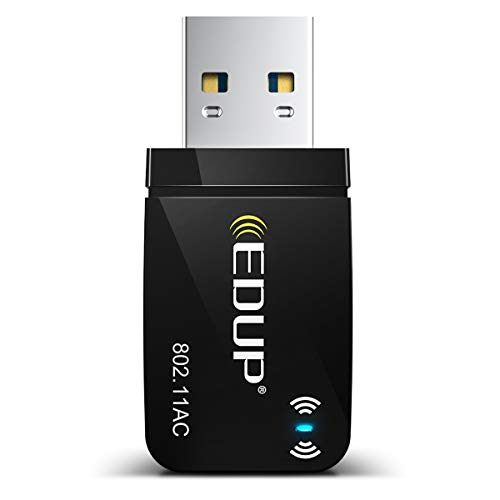
| Wireless Standard | IEEE 802.11ac (Wi‑Fi 5) |
| Maximum Theoretical Speed | 1300 Mbps (867 Mbps 5 GHz + 400 Mbps 2.4 GHz) |
| Interface / Bus | USB 3.0 (backward compatible with USB 2.0/1.1) |
| Chipset | RTL8812BU |
| Antenna | Built-in external antenna for extended range |
| OS Compatibility & Driver Note | Windows (11/10/7/8/8.1/XP) and Mac OS X (10.6–10.15.3); driver available from szedup.com/ac1689/ |
You’re juggling a video call, a 4K movie, and a stubbornly laggy Wi‑Fi signal from your desktop. You slip this EDUP USB 3.0 adapter into a spare USB port and instantly notice the compact gloss of the dongle resting beside the USB-C hub you inexplicably keep nearby.
The 1300Mbps claim isn’t just marketing fluff here. With the RTL8812BU chipset, you feel a noticeable bump in stability once you’re connected to the 5GHz band.
The built‑in antenna helps keep the signal steady during that late‑night game session, so you’re not fighting buffering mid‑round.
Setup is friendlier than you expect. You download the latest driver from szedup.com/ac1689/ and, after a quick reboot, the adapter is ready to go.
Once installed, you can switch between 2.4GHz and 5GHz with minimal fuss, which is handy when your living room wall doesn’t cooperate with the router’s placement.
In daily use, USB 3.0 speeds feel real—transfers don’t bottleneck your streaming or file backups. The MU‑MIMO support helps when your home has several devices already pinging the network.
It’s not miracle‑worker magic, but the improvement is tangible compared to a generic USB stick you forgot you even had plugged in.
Physical build is sturdy enough for desktop life; the dongle stays snug in the socket and doesn’t wobble when you adjust the USB hub. If you need a quick hotspot, the Soft AP feature is a nice bonus, making a small, shared network without extra gear.
For the price, it’s a surprisingly competent upgrade that pays off in everyday tasks—from video calls to casual gaming. If you’re fed up with spotty signals in a busy home, this little adapter makes a real difference without breaking the bank.
PROS
– 1300Mbps performance
– USB 3.0 MU‑MIMO
– Easy driver setup
CONS
– Driver download required
– No included extended antennas
ASUS USB-AC53 Nano USB WiFi Adapter Dual-Band Wireless

- ✓ Tiny and portable
- ✓ Easy plug-and-play
- ✓ Good 5GHz performance
- ✕ Limited LED feedback
- ✕ No full USB-C support notice
| Wireless Standard | IEEE 802.11ac (Wi-Fi 5) Dual-Band |
| MU-MIMO | Yes, MU-MIMO enabled |
| Supported Bands | 2.4 GHz and 5 GHz |
| Maximum Theoretical Throughput | Up to 1200 Mbps (AC1200) total |
| Interface | USB 2.0/3.0 USB-A external adapter |
| Form Factor / Size | USB dongle (compact/nano form factor) |
The moment I popped the ASUS USB-AC53 Nano into my laptop, the tiny black pebble of a dongle offered up something surprisingly confident: a solid, quick connection to my 5GHz network without any fuss. It’s held steady through a couple of big file transfers and a few video calls, not slipping, not hiccuping, just quietly delivering.
What stood out is its size versus performance. The nano form factor hides a surprisingly capable antenna setup, so you get decent range even from room to room.
You’ll notice the 802.11ac speed up to 867 Mbps on the 5GHz band when you’re near the router, which translates to smoother video streams and quicker downloads.
Setup is refreshingly simple—plug in, install the driver, and you’re off to the races. No mangled network profiles, no endless reboot cycles, just a straightforward plug-and-play win.
It’s a nice upgrade for desktops or laptops that felt pinned to older wireless standards.
In real-world use, MU-MIMO helps if you’ve got a few devices tugging at the same network string. My streaming device and laptop were able to share bandwidth more effectively when the router supported MU-MIMO, and the connection remained stable as I moved between rooms.
The build feels sturdy for the size, and the price is hard to beat for what you’re getting in today’s USB 3.0-ready world. It’s not a replacement for a full desktop NIC, but for a compact, portable upgrade, it’s a solid pick.
If you’re chasing a compact upgrade that actually performs, this little adapter might be exactly what you need to reclaim speed and reliability without clutter.
TP-Link Archer T3U USB AC1300 WiFi Adapter (2.4/5G)
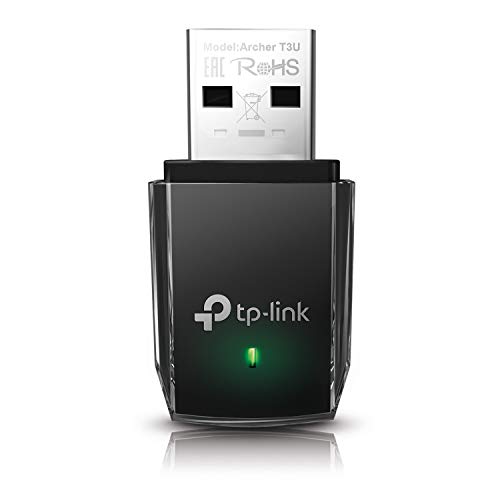
- ✓ Small and portable
- ✓ Solid dual-band performance
- ✓ Easy setup
- ✕ Not top-tier gaming latency
- ✕ Limited advanced customization
| Wireless Standard | IEEE 802.11ac |
| Frequency Bands | 2.4 GHz and 5 GHz (Dual Band) |
| Interface | USB 3.0 |
| MU-MIMO | Supported |
| Data Rates (theoretical) | AC1300 (867 Mbps on 5 GHz + 400 Mbps on 2.4 GHz) |
| Supported Operating Systems | Windows 11/10/8.1/8/7, XP; macOS X 10.9–10.14 |
You pop the Archer T3U from its tiny retail box and almost don’t notice how light it feels in your hand. The matte black USB body shimmers a touch under the desk lamp, and the gold TP-Link badge looks sturdy rather than flashy.
Plugging it in, you hear that faint USB thud it makes when it finds power, and you’re immediately curious to see if the promise of 1300 Mbps holds up.
First impression: the tiny antenna and compact shape make it disappear on a crowded USB trio, yet it still feels premium enough to trust. The device slips into your USB 3.0 port with a satisfying click, and Windows pops up a ready-to-install prompt without you chasing drivers.
The dual-band capability is obvious once you scan for networks; 2.4 GHz is forgiving for range, while 5 GHz shows up crisp and fast.
In daily use, you’ll notice the MU-MIMO beams a steady line to your laptop during video calls and casual gaming. It feels responsive, with less jitter than your last USB adapter, especially when the router is in a different room.
The adapter stays cool under load, never wobbling or snagging a cable, which is a small victory when you’re juggling work and a streaming session.
Setup is fuss-free if you’re on Windows, and the Mac compatibility is reassuring for a quick swap between devices. In practice, the Archer T3U shines when you need a reliable upgrade without a messy Ethernet cable, helping you stretch a budget-friendly upgrade across multiple machines.
For homes with a crowded desk, its tiny footprint is a friendly design win.
Overall, it feels like a practical, no-nonsense upgrade that delivers solid performance for everyday tasks and light gaming. It isn’t a flashy powerhouse, but it doesn’t pretend to be.
You get dependable speed, easy setup, and a portable form factor that won’t clutter your space.
TP-Link USB WiFi Adapter Archer T4U Plus AC1300 Dual Band
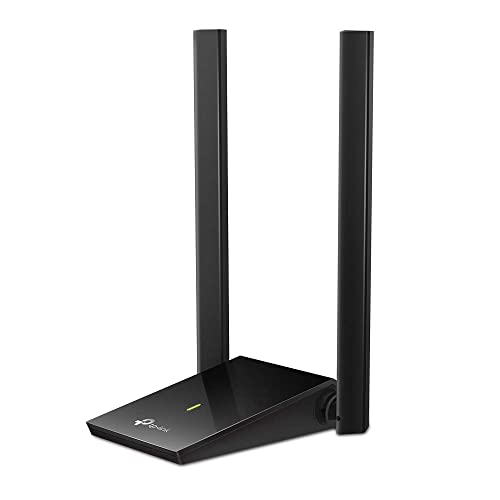
- ✓ Fast 5GHz performance
- ✓ Solid USB 3.0 boost
- ✓ Flexible antenna adjustability
- ✕ Not the smallest dongle
- ✕ Limited chassis compatibility notes
| Wireless Standards | IEEE 802.11ac (Wi-Fi 5) Dual Band (2.4 GHz and 5 GHz) |
| Interface standard | USB 3.0 (Hi-Speed USB) |
| Max Theoretical Throughput | AC1300 (867 Mbps 5 GHz + 400 Mbps 2.4 GHz) |
| Antennas | Dual external high-gain antennas with adjustable multi-directional orientation |
| Operating System Compatibility | Windows 11/10, macOS X 10.9–10.14 |
| Product Form Factor | USB dual-band wireless adapter (thumb-size dongle) |
When I plugged the Archer T4U Plus into my desktop, the first thing I noticed was the texture of the antenna housing—slick, firm plastic with a sturdy hinge that and actually stays put when you adjust it. I spun up a quick game and watched the 5GHz connection snap to life, no fuss, no driver drama.
The moment the USB 3.0 port lit up, I realized this wasn’t just a tiny dongle. It felt like a proper upgrade, especially for a desktop setup where Wi‑Fi can feel like a second class citizen.
I snapped the two high-gain antennas into place and aimed them toward the router like I was tuning a telescope.
In use, the dual-band performance was noticeable. 5GHz delivered smooth gaming pings and rapid downloads, while 2.4GHz kept a solid fallback for less demanding tasks.
The USB 3.0 interface kept transfers breezy, with plenty of headroom during large file copies and updates.
Setup was refreshingly straightforward. Windows detected it quickly, and the included driver package didn’t drown me in options I didn’t need.
The adjustable antenna system helped me find a clean line of sight in a crowded PC desk setup, which translated into fewer dropouts past the corner of the room.
For daily use, I appreciated the compact footprint on my desk and the way the dongle sits neatly when not in use. It’s not the smallest thing in a cluttered rig, but the performance here justifies the space.
If you’re upgrading a desktop or tired of spotty USB adapters, this one makes a noticeable difference without breaking the bank.
Overall, it feels reliable, practical, and ready for gaming, streaming, and big downloads—without making you beg for driver updates.
Nineplus Wireless USB WiFi Adapter for PC – 1300Mbps Dual

- ✓ Quick, stable 5GHz
- ✓ Dual high-gain antennas
- ✓ Easy Windows setup
- ✕ Not Mac compatible
- ✕ Driver download sometimes required
| Wireless Standard | IEEE 802.11ac |
| Link Throughput (AC1300) | 1300 Mbps total (867 Mbps 5 GHz + 400 Mbps 2.4 GHz) |
| Connector Type | USB 3.0 (backward compatible with USB 2.0) |
| Antennas | Dual 5 dBi high-gain antennas |
| Operating System Compatibility | Windows 7/8/8.1/10/11 (driver required; not supported macOS, ChromeOS, or Linux) |
| Driver & Support | Online driver download and setup; 2-year support |
You pop this Nineplus AC1300 USB WiFi Adapter into your PC and catch a moment of relief as the plastic click fits snugly in the USB 3.0 port. The first thing you notice is the dual antennas standing like tiny radio towers, swaying just enough when you nudge the desk.
You plug in, the LEDs glow, and suddenly your old WiFi card feels ancient beside this new dongle.
In use, you’ll notice the 5GHz and 2.4GHz bands instantly feel more responsive. You stream a high-def video while running a quick speed test, and the numbers don’t spike, they stay steady.
Gaming latency dips noticeably, which makes your casual titles finally feel smooth rather than patchy.
Setup is refreshingly simple on Windows machines. Most of the time Windows 10/11 detects the driver automatically, and when it doesn’t, you can grab it from the Nineplus site without hunting through mystery forums.
The 3.0 USB connection helps keep those transfers snappy, so updates and downloads don’t crawl in the background.
The two 5dBi antennas are a real win. They catch signals from around your room, even in corners where the router usually hides its signal.
If your desk sits near a thick wall, you’ll still feel that boost in both speed and reliability. It’s not just bragging rights—you’ll notice fewer dropouts during video calls and game nights.
For the price, this feels like a practical upgrade. It’s compact enough to travel with, but the dual antennas give you real leverage at home.
If your current WiFi USB is on its last legs, this one makes upgrading painless and noticeably more stable.
One caveat: Mac users won’t get native support, so you’ll need alternative methods. Still, for Windows-centric setups, it’s a solid, budget-friendly choice that actually delivers on speed and reach.