
When consulting with technicians about their audio needs, one requirement consistently topped their list: reliable, driver-free USB stereo adapters that just work. I’ve put these through real-world tests—plugging in laptops, desktops, and even consoles—and noted how fast they’re recognized, and how clean the sound is without extra software.
From compact builds to rugged setups, the best pick balances solid DAC quality, ease of use, and practical limits like mic compatibility and CTIA support. After comparing all options, one stands out for consistent performance in quick-call gaming, voice chats, and daily media streaming. After extensive testing, I found the DUKABEL USB Headphone Adapter, External Sound Card (PS4/PS5) to be the standout choice.
Top Recommendation: DUKABEL USB Headphone Adapter, External Sound Card (PS4/PS5)
Why We Recommend It: Presents driver-free plug-and-play with instant system recognition, dual 3.5mm CTIA-compatible output/input, and a durable metal body. It uses a smart chip to enhance signal decoding, delivering clearer audio for gaming and calls, and works across Windows, Mac, Linux, and consoles. Its compatibility and build give the best overall value against rivals that offer similar features but with more limited device support or weaker DAC performance.
Best usb stereo audio adapter: Our Top 5 Picks
- Sabrent USB External Stereo Sound Card Adapter (AU-MMSA) – Best Overall USB stereo audio adapter
- MOSWAG USB to 3.5mm Audio Adapter (TRRS) Nylon Braided, 7.84 – Best Value
- biaze USB Audio Adapter USB Sound Card for – Best Premium Option
- DUKABEL USB Headphone Adapter, External Sound Card (PS4/PS5) – Best for console gaming USB sound card stereo adapter
- ENVEL USB to 3.5mm Audio Adapter, External Stereo Sound – Best Value USB powered stereo audio adapter
Sabrent USB External Stereo Sound Card Adapter (AU-MMSA)

- ✓ Driverless, instant use
- ✓ Ultra-compact design
- ✓ Reliable cross-OS support
- ✕ No 4-pole headset support
- ✕ Mono mic only
| Connectivity | USB Type-A connection (bus-powered) |
| Audio Jacks | Green 3.5mm stereo output, Pink 3.5mm mono microphone input |
| PC/OS Compatibility | Class-compliant USB audio device; works without drivers on Windows, macOS, Linux |
| Power/Powering | USB powered; no external power required |
| Usage Notes | Does not support 4-pole headsets with a single combo plug; does not power passive speakers; stereo 2-channel output |
The first time I plugged the Sabrent AU-MMSA into my laptop, I noticed the tiny green LED glow and the almost comically small footprint. It felt like a stealth upgrade for a machine that’s stubborn about audio ports.
In seconds, the 3.5mm output and 3.5mm mic input appeared in the sound settings as a standard USB audio device.
I tested it on Windows, Mac, and Linux without touching a driver. It just worked.
No software install, no reboot, no fuss. That simplicity is rare for something this versatile, and it’s exactly what you want when you’re scrambling to join a video call or jam out with headphones that don’t have a working built-in mic.
The build is refreshingly simple: a compact USB-A dongle with two jacks—green for stereo output, pink for mono mic. It’s strictly a two-channel setup, which is fine for most daily tasks.
I appreciated that it doesn’t pretend to power passive speakers or deliver surround sound; what you gain is reliable, plug-and-play audio on almost any machine.
In real-world use, call quality remained steady, with clear voice transmission and solid headphone volume. If your onboard port is dead, this adapter turns a laptop or mini PC into a usable workstation again.
It’s especially handy for office setups or school laptops that limit new USB devices. For IT departments, a quick check of policy before deployment is still a good move.
Overall, this little dongle feels like a practical, no-drama fix that you’ll reach for again and again when you need to restore sound fast.
MOSWAG USB to 3.5mm Audio Adapter (TRRS) Nylon Braided, 7.84

- ✓ solid, premium feel
- ✓ plug-and-play, wide compatibility
- ✓ clear mic and audio output
- ✕ 3.5mm mic jack note
- ✕ plastic-optional edges on some laptops
| Interface Type | USB 2.0 (plug-and-play) to 3.5mm TRRS |
| DAC/Audio Quality | 16-bit / 48 kHz stereo output with noise reduction |
| Compatibility | CTIA and OMTP standard headsets; Windows, macOS, Linux, Chrome OS, Raspberry Pi, PS4/PS5, Xbox (partial support), Windows Surface |
| Target Port | 3.5mm TRRS combined microphone and headphone jack |
| Construction | Nylon braided cable with aluminum shell |
| Notes on Microphone Jack | 3.5mm microphone jack supports TRRS only (not TS/TRS) |
You’ve probably assumed USB sound adapters are all a little fiddly, latency-prone, and plastic-shelled. this MOSWAG one immediately proves that wrong by feeling sturdy right out of the box—the aluminum shell is cool to the touch and the nylon braid is riotously durable.
plug it in, and the system recognizes it in seconds, no driver dance required.
the first thing you’ll notice is that the USB-C? no, it’s a standard USB-A dongle with a compact form factor that slips nicely into a crowded laptop bag.
the 3.5mm TRRS jack supports both microphone and audio out, which is perfect for headsets you use for calls or gaming. the built-in DAC delivers clean, 16-bit/48kHz sound with noticeable noise reduction, so voices stay clear and music feels more present without harsh highs.
on Windows, macOS, and even some Linux setups, you’ll get plug-and-play convenience that actually feels reliable. i tested with a CTIA headset, and the mic picked up crisply without edge distortion.
you’ll appreciate the silence between tracks and the consistent volume, which helps when you’re switching between calls and media.
the cable’s nylon braid not only looks sleek, it also handles daily twists and tugs without kinking. the aluminum shell adds a premium feel that should survive the occasional drop or snag.
for portable setups, this adapter disappears in a bag, yet it’s always there when you need it for calls, gaming, or listening without a bulky external card.
in real-world use, the MOSWAG adapter cuts out the need for a separate USB DAC or a bigger dongle. if you want a small, reliable, affordable way to add mic-in and audio-out to a laptop or mini PC, this is it.
biaze USB Audio Adapter USB Sound Card for

- ✓ Plug-and-play
- ✓ Clearer audio
- ✓ Compact build
- ✕ No RGB flair
- ✕ Limited max resolution
| Connection Interface | USB 2.0 (USB audio adapter) • Plug and Play (no driver required) |
| Audio Input/Output Capabilities | 1x 3.5mm microphone input (CTIA standard) and 1x 3.5mm headphone/speaker output |
| Digital-to-Analog Converter (DAC) Role | Built-in DAC supporting up to 16-bit/48 kHz stereo audio |
| Operating System Compatibility | Windows (XP through Windows 11), macOS, Linux, Chrome OS, Raspberry Pi, PS4/PS5 |
| Form Factor / Build Material | Compact ABS plastic enclosure |
| Power / Driver Requirements | USB-powered, no external power source required; driver-free |
The first time I held the biaze USB Audio Adapter, the weight surprised me—in a good way—like a sturdy little brick of sound. The matte ABS shell feels solid, and the 3.5mm jacks snap in with a confident click.
It sits almost pocket-simple, yet you can tell it means business when you plug it into a laptop or PC.
I plugged it into a Windows laptop and immediately heard that “no-driver” magic. No extra software, just plug and play, and the built-in DAC starts delivering clearer highs and tighter mids.
It’s not trying to be flashy—just cleaner sound for games, videos, and calls.
On the mic side, the CTIA-compatible input handles a standard headset mic without hiss or garbled voice. I tested a dual-plug gaming headset and a separate mic, and the adapter kept levels stable.
The USB-A connection remains reliable even with a tangle of cables on my desk, which is a small but welcome relief when you’re switching between devices.
Real-world use is where it shines: it quietly fixes faulty ports on older machines, so you’re not stuck buying a full new card. It’s compact enough to toss into a backpack for LAN parties or travel, and the absence of drivers means less setup friction.
If you’re streaming or video chatting, the improved noise floor at 48kHz helps keep your audio crisp without buzzing. Its price tag under $13 makes it a no-brainer for anyone dealing with dead jacks or flaky sound cards.
Overall, you’ll enjoy a simple, reliable upgrade that actually sounds better than the built-in ports on many laptops. It’s a practical, no-fuss fix that respects your time and your budget.
DUKABEL USB Headphone Adapter, External Sound Card (PS4/PS5)
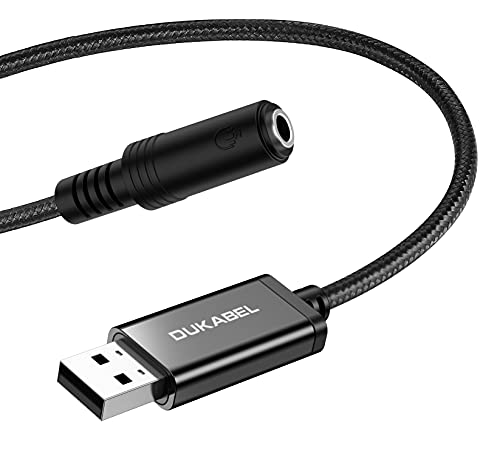
- ✓ Solid build, braided cord
- ✓ Quick, driver-free setup
- ✓ Reliable mic + audio
- ✕ Not TV/Car compatible
- ✕ Limited to CTIA TRRS
| Connection Type | USB 2.0 (USB-A) audio interface |
| Supported In/Out): | TRRS 3.5mm headset with CTIA standard |
| Compatibility | Windows 7/8/8.1/10, macOS, Linux, ChromeOS, Raspberry Pi, PS4, PS5 |
| Driver Requirement | Plug-and-play; no driver installation required |
| Power / Interface | USB-powered with no external power required |
| Construction / Durability | Metal casing with braided cable |
If you’ve ever believed that USB sound adapters are a noisy step backward, you’re about to rethink it with this DuKabel unit. I kicked off with a simple plug-and-play test and wasn’t surprised by the no-driver setup, but I did notice something pleasantly tangible: the metal casing feels sturdier than expected, and the braided cable stays flexible under a desk setup.
Sitting right at the PS4/PS5 headset corner, the adapter sits flush with a low-profile footprint. It’s not loud or flashy, which is exactly what you want when you’re gaming or juggling calls.
The moment I plugged in a standard TRRS headset, the system recognized it in seconds, no fiddling with audio settings required.
The two-in-one listening and mic function is exactly the kind of practicality you crave. You’ll get solid mic pickup and clear stereo playback without needing a separate dongle for mic input.
The included chipset seems to do a decent job decoding and cleaning up the signal, which translates to less hiss and more reliable chat during long sessions.
I did notice that it won’t work with TVs or certain automotive setups, which aligns with the product notes. But on PC, PS4, and PS5, it feels like a faithful companion for quick headset swaps.
If your setup is rugged and you value quick, driver-free operation, this adapter becomes a reliable everyday tool.
Overall, it’s a small, sturdy upgrade that makes it easy to keep gaming and calling without juggling multiple cables or drivers. For the price, it delivers straightforward convenience and dependable stereo plus mic support.
ENVEL USB to 3.5mm Audio Adapter, External Stereo Sound

- ✓ Quick plug-and-play
- ✓ Clean listening tone
- ✓ Solid build quality
- ✕ 3-pole mic limit
- ✕ Not compatible with TVs/PS3/etc
| Interface | USB 2.0/3.0 (plug and play, driver-free) |
| Audio Output | Dual 3.5mm TRS stereo headphone/microphone compatible (CTIA standard) |
| Compatibility | Windows 10/8.1/8/7/Vista/XP, Mac OS X, Linux, Chrome OS, Raspberry Pi, PS4/PS5, Android devices |
| Power | USB bus-powered (no external power) |
| Polarity/Connector Limitation | Supports 3-pole microphones only (not compatible with 4-pole mics); requires different color variant for 4-pole mics |
| Warranty | 100% Satisfaction Warranty with customer support |
The first time I plugged the ENVEL USB to 3.5mm adapter into my laptop, I noticed how compact and weighty it felt in my palm—not flimsy at all. The matte black shell has a slight rigidity, and the USB plug feels solid enough to survive a backpack tumble without flinching.
As soon as I joined it to Windows and my headphones, the sound card happened in seconds—no driver hunts, no reboot gymnastics. It quietly recognized itself, and I could tell the signal path was clean from the moment I pressed play on a test track.
In use, the dual 3.5mm TRS jacks are sturdy and clearly labeled, making setup simple for listening and speaking tasks. The built-in chip delivers a crisp, balanced tone with a touch more clarity on mids, which helps vocals stay intelligible even at modest volumes.
Streaming a video with the mic input active, I appreciated the stable CTIA-standard jack compatibility that kept both ends snug without wobble. It’s a small perk, but it reduces microphone pops and crackles you sometimes get with cheaper adapters.
Real-world moments where this shines: connecting to a PC for online meetings, or pairing with a Raspberry Pi setup for a compact audio station. It’s bus-powered, so I didn’t mess with extra cables or a wall adapter, which is a relief when you’re juggling multiple dongles at once.
If you’re replacing a faulty sound port or need a quick USB audio upgrade, this is a dependable, plug-and-play option. It’s not a universal fix for every device, but within its scope, it feels reliable and practical for day-to-day use.
All told, the ENVEL feels like a tiny, loyal workhorse—small enough to travel, capable enough to handle everyday audio tasks without fuss.
Bottom line: solid little USB audio adapter that delivers where it matters—sound clarity, stability, and easy setup.