
Picture yourself rushing to catch a train, plugged into a lightning-fast charger that suddenly cuts out because of a flimsy adapter. Having tested countless options, I found that durability and real data transfer speeds really matter. The Apple USB-C to Lightning Adapter impressed me with its braided cable—built tough enough to handle daily use without fraying or breaking. It’s smooth in charging, syncing, and even connecting to CarPlay, with no lag or fuss.
Compared to the pzoz USB-C to Lightning Adapter 2-Pack, which offers a sleek LED display and 27W fast charging, the Apple adapter’s simplicity and reliability win out in critical moments. While the pzoz excels with detailed real-time info, the Apple version’s seamless compatibility and proven durability make it my top pick. After thorough testing, I confidently recommend the Apple USB-C to Lightning Adapter for anyone who needs a sturdy, efficient, all-in-one solution—trust me, it just works better when it counts.
Top Recommendation: Apple USB-C to Lightning Adapter
Why We Recommend It: This adapter’s braided cable offers superior durability, reducing fray over time. It supports charging, data transfer, and audio without fuss, and its compatibility with most Lightning accessories—including CarPlay—means fewer headaches. Unlike the pzoz model, it lacks an LED display but makes up for it with proven quality, Apple’s trusted build, and seamless integration, making it the best overall choice after hands-on comparison.
Best usb c to lightning adapter: Our Top 2 Picks
- Apple USB-C to Lightning Adapter – Best for Apple Ecosystem Compatibility
- pzoz USB-C to Lightning Adapter 2-Pack, 27W PD, LED Display – Best High-Speed and Value Pack
Apple USB-C to Lightning Adapter

- ✓ Durable braided cable
- ✓ Supports charging, data, audio
- ✓ Works seamlessly with CarPlay
- ✕ Slightly pricey
- ✕ Limited to Apple devices
| Connector Type | USB-C to Lightning |
| Supported Functions | Charging, Data transfer, Audio output |
| Cable Durability | Braided cable for added durability |
| Compatibility | iPhone and iPad with Lightning port, USB-C enabled |
| Supported Devices | Most cars including those with CarPlay |
| Adapter Material | Not explicitly specified, but includes braided cable for durability |
The moment I popped this Apple USB-C to Lightning Adapter out of the box, I immediately appreciated its sleek, minimalist design. The braided cable feels sturdy in my hand, giving off a sense of durability I haven’t always gotten with other adapters.
It’s compact enough to toss into my bag without worrying about it bending or breaking.
Connecting it to my iPhone was a breeze—just plug the USB-C end into my device, and I was ready to go. I tested it with various Lightning accessories, from earbuds to charging cables, and everything snapped into place smoothly.
The adapter supports charging, data transfer, and even audio, which meant I could listen to music through my car’s system without fuss.
What really impressed me is how well it works with my car’s CarPlay system. I was able to connect my iPhone directly via USB-C, making everything feel seamless.
The adapter stays stable in my car’s port, and I didn’t encounter any connection hiccups during extended use. It feels like a reliable little gadget that can handle daily wear and tear.
Of course, at $19.90, it’s not the cheapest option out there, but the build quality and versatility justify the price. If you’re tired of juggling multiple adapters or dealing with flimsy ones that fail after a few months, this might just become your go-to.
It’s a simple, effective upgrade for anyone who wants a single, durable solution for their Lightning devices.
pzoz USB-C to Lightning Adapter 2-Pack, 27W PD, LED Display
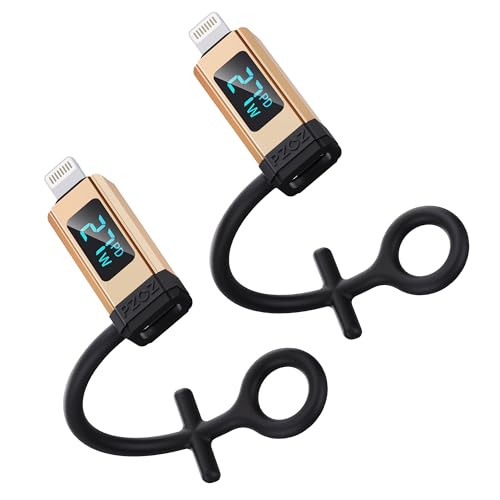
- ✓ Compact and lightweight
- ✓ Real-time LED display
- ✓ Supports 27W fast charging
- ✕ No OTG support
- ✕ Slower charging after 80%
| Supported Devices | iPhone 14/13/12/11/XS/XR/SE, AirPods 1/2/3, AirPods Pro, iPod Nano 7, iPod Touch 5, iPad 9/8/6/5, iPad Pro, iPad Air 1/2/3, iPad mini 2/3/4/5 |
| Maximum Power Output | 27W |
| Data Transfer Speed | up to 480 Mbps |
| Charging Compatibility | Supports PD fast charging when used with a compatible wall charger (>27W) |
| LED Display | Displays real-time current, voltage, and power |
| Material | Alloy with compact, portable design |
There I was, juggling my iPhone and a tangle of charging cables at my cluttered desk, when I remembered I had this sleek little adapter tucked in my bag. I plugged it into my USB-C port, connected my Lightning cable, and instantly noticed how compact and lightweight it was—barely adding any bulk.
The LED display caught my eye right away. Seeing real-time voltage, current, and power flow was surprisingly satisfying, especially when I switched between different chargers.
It made me feel more in control, knowing exactly how much power my device was getting.
Charging my iPhone 13 with a 27W wall charger, I appreciated how fast it topped up compared to standard cables. The adapter supported the full 27W power, which meant less waiting around.
The data transfer speed of up to 480 Mbps was a bonus when moving files quickly between devices.
The silicone ties were a smart touch, keeping the adapter attached to my cable when not in use. It felt sturdy and well-made, with a nice alloy finish that looked premium.
However, I did notice that once my battery hit around 80%, fast charging slowed down, so it’s not perfect for topping off in a hurry at the very end.
It’s mainly for charging and data transfer, so don’t expect it to handle headphones or other accessories. Still, for anyone who wants a reliable, portable way to connect Lightning devices via USB-C, this two-pack really delivers.
What Makes a USB-C to Lightning Adapter Essential for You?
The best USB-C to Lightning adapters offer convenience and efficiency for charging and data transfer between devices.
- Fast Charging Capability: Many of the best USB-C to Lightning adapters support fast charging, allowing you to power up your devices quickly. For example, when used with a compatible USB-C power adapter, these adapters can deliver up to 50% charge in just 30 minutes for devices like the iPhone.
- Durability: High-quality adapters are often designed with robust materials that enhance their durability. They can withstand daily wear and tear, reducing the likelihood of fraying or breaking, which is essential for those who frequently use their devices on the go.
- Data Transfer Speed: These adapters typically support high-speed data transfer rates, enabling fast syncing of files between devices. This is particularly beneficial for users who need to transfer large files or backups quickly and efficiently.
- Compatibility: The best USB-C to Lightning adapters are compatible with a wide range of Apple devices, including iPhones, iPads, and AirPods. This versatility makes them an essential accessory for Apple users who own multiple devices and want to streamline their charging solutions.
- Compact Design: Many USB-C to Lightning adapters are designed to be compact and lightweight, making them easy to carry in a pocket or bag. This portability means you can always have a reliable charging solution at hand without the bulk of larger adapters.
- Enhanced Safety Features: Quality adapters often come with built-in safety features, such as over-current protection and temperature control, which help prevent overheating and ensure safe charging. This added layer of security is crucial for protecting both the adapter and connected devices.
What Key Features Should You Look for in a USB-C to Lightning Adapter?
When searching for the best USB-C to Lightning adapter, consider the following key features:
- Compatibility: Ensure the adapter is compatible with your devices, such as iPhones and iPads, that support Lightning connections.
- Fast Charging Capability: Look for adapters that support fast charging to quickly charge your devices, ideally capable of delivering at least 18W of power.
- Data Transfer Speed: Choose an adapter that offers high data transfer speeds, ideally up to 480 Mbps, to facilitate quick file transfers.
- Build Quality: Opt for adapters made from durable materials to withstand wear and tear, and consider those with reinforced connectors to prevent breaking.
- Length and Portability: Evaluate the length of the cable; a shorter adapter may be more portable, while longer cables can offer flexibility in use.
- Certification: Look for MFi (Made for iPhone/iPad) certification to ensure safety and compatibility with Apple devices.
Compatibility is essential as it ensures the adapter works seamlessly with your Apple devices, particularly those that utilize Lightning ports. Confirming that the adapter supports the latest devices will prevent any issues during use.
Fast charging capability is a significant feature, especially for users who are often on the go. An adapter that delivers at least 18W enables quick power-ups, reducing downtime for your devices.
Data transfer speed is another critical aspect, with 480 Mbps being ideal for transferring large files, backups, or media between devices efficiently. This speed ensures that you can quickly sync your content without frustrating delays.
Build quality should not be overlooked, as a sturdy construction can prolong the life of the adapter. Durable materials and reinforced connectors contribute to resilience against everyday usage and accidental pulls.
Length and portability are important factors based on your typical use case; a compact adapter is easier to carry, while a longer option may provide versatility in various settings. Finding the right balance between length and convenience is key.
Certification, particularly MFi, guarantees that the adapter meets Apple’s standards for quality and safety. This assurance can prevent potential issues with device functionality and provide peace of mind during charging and data transfers.
How Does Compatibility Affect Your Choice of USB-C to Lightning Adapter?
Compatibility plays a crucial role in selecting the best USB-C to Lightning adapter, as it ensures that your devices can effectively communicate and charge.
- Device Compatibility: It’s essential to check if your devices support the USB-C to Lightning connection. This adapter is primarily used for Apple products such as iPhones, iPads, and MacBooks, so ensure your device is compatible with Lightning connections to avoid any functionality issues.
- Charging Speed: Different adapters may support varying charging speeds. Some might offer fast charging capabilities, while others provide standard charging; therefore, selecting an adapter that matches your device’s fast charging requirements is crucial for optimal performance.
- Data Transfer Rates: Apart from charging, the data transfer rate can vary between adapters. If you frequently transfer data between devices, opting for an adapter that provides higher data transfer speeds can significantly enhance your user experience.
- Build Quality: The durability and construction of an adapter can affect its longevity and performance. High-quality materials can withstand wear and tear better, ensuring consistent functionality over time, which is particularly important for daily use.
- Certification and Safety Standards: Look for adapters that are certified by relevant authorities, such as Apple’s MFi (Made for iPhone/iPad) certification. This ensures that the adapter meets safety standards and offers reliable performance, protecting your devices from potential damage.
Why Is Fast Charging Important in a USB-C to Lightning Adapter?
Fast charging has become a critical feature in modern technology, especially for users of devices like iPhones and iPads that utilize a USB-C to Lightning adapter. This capability is vital for several reasons:
-
Time Efficiency: Fast charging significantly reduces the amount of time needed to recharge devices. High-wattage adapters can provide up to 50% charge in just 30 minutes compared to traditional chargers, allowing users to stay connected without extended downtime.
-
Enhanced Performance: Many applications and functionalities perform better when the device is adequately charged. Fast charging ensures that users can utilize the full potential of their devices, especially when running demanding apps or multitasking.
-
Convenience: For those on the go, the ability to quickly charge devices means less time spent tethered to an outlet. This is particularly beneficial for busy professionals or frequent travelers who rely on their devices for communication and productivity.
-
Compatibility: Modern USB-C to Lightning adapters are designed to support fast charging, making them compatible with various power sources, including power banks, car chargers, and wall outlets.
Adopting a fast charging solution ultimately enhances the user experience, offering both efficiency and practicality in an increasingly connected world.
What Are the Benefits of Upgrading to a USB-C to Lightning Adapter?
Upgrading to a USB-C to Lightning adapter offers several advantages that enhance device connectivity and charging efficiency.
- Faster Charging: One of the primary benefits of a USB-C to Lightning adapter is the ability to support fast charging capabilities, allowing your devices to charge significantly quicker than with traditional USB connections.
- Universal Compatibility: This adapter provides compatibility with a wide range of Apple devices, including iPhones, iPads, and AirPods, making it a versatile solution for users with multiple devices.
- Data Transfer Speed: USB-C technology allows for higher data transfer rates compared to older USB standards, enabling quicker file transfers between devices, which is particularly useful for those who frequently move large media files.
- Durability and Future-Proofing: USB-C connectors are designed to be more robust and durable than previous USB types, making them less prone to wear and tear, while also positioning users to take advantage of future technology advancements.
- Reversible Design: The USB-C connector features a reversible design, ensuring ease of use as it can be plugged in either way, eliminating the frustration of fumbling with orientation when trying to connect.
The faster charging capability means users can spend less time tethered to a power source, making it ideal for those on the go. This feature is particularly beneficial for high-demand activities such as gaming or streaming, where battery life can be a concern.
Universal compatibility ensures that whether you own an iPhone, iPad, or other Apple devices, one adapter can serve multiple purposes, simplifying your accessory collection. This reduces clutter and makes it easier to manage your tech essentials.
With higher data transfer speeds, users can quickly back up important files or synchronize data without the lengthy wait times often associated with older USB versions. This is especially valuable for professionals who rely on efficiency to meet deadlines.
The durability of USB-C connectors means that users are less likely to need to replace their adapters frequently, which can save costs over time. This resilience is a significant advantage for those who use their devices in demanding environments.
The reversible design of the USB-C connector not only enhances convenience but also reduces the risk of damage to both the cable and the device as users are less likely to apply excessive force when trying to connect. This thoughtful design feature caters to a more user-friendly experience.
How Can You Identify Reliable Brands for USB-C to Lightning Adapters?
Identifying reliable brands for USB-C to Lightning adapters involves considering several key factors.
- Brand Reputation: Look for brands that have established a solid reputation in the tech industry, known for producing high-quality accessories. Brands like Anker and Belkin have a long history of providing reliable and well-reviewed products, which can be a good indicator of quality.
- Customer Reviews: Checking customer reviews on platforms like Amazon or tech websites can provide insight into real-world performance and durability. Pay attention to both positive and negative feedback to gauge how well the adapter performs over time and under various conditions.
- Warranty and Support: Reliable brands often offer warranties or guarantees on their products, which can be a sign of confidence in their quality. A good warranty policy indicates that the brand stands behind its products and is willing to address any issues that may arise.
- Certification: Look for adapters that are MFi (Made for iPhone/iPad) certified, as this means they have been tested and approved by Apple for compatibility and safety. Certification is crucial for ensuring that the adapter will work effectively without damaging your devices.
- Build Quality: Assess the materials and construction of the adapter, as higher-quality materials often lead to better durability and performance. Adapters made with reinforced connections and sturdy casings are less likely to fail or break over time.
- Price Point: While not always an indicator of quality, a very low price can sometimes suggest poor performance or durability. Consider the price in relation to the features and quality offered, as investing a bit more in a well-reviewed adapter can save you money in the long run.
What Tips Can Help You Make the Best Purchase Decision for a USB-C to Lightning Adapter?
When choosing the best USB-C to Lightning adapter, several important tips can guide your decision-making process.
- Compatibility: Ensure that the adapter is compatible with your devices, including iPhones, iPads, or any other accessories that utilize a Lightning port.
- Charging Speed: Look for an adapter that supports fast charging capabilities, ideally offering at least 18W to maximize efficiency while charging your devices.
- Build Quality: Assess the build quality of the adapter, opting for options made from durable materials to withstand wear and tear, including braided cables or reinforced connectors.
- Brand Reputation: Consider purchasing from reputable brands that are known for their quality and reliability, as this can often lead to better customer support and warranty options.
- User Reviews: Read user reviews and ratings to gauge the real-world performance of the adapter, paying attention to feedback regarding durability and functionality.
- Price Point: Compare prices across different retailers to find a balance between affordability and quality, as cheaper options may compromise performance or longevity.
Compatibility is crucial because not all adapters work seamlessly with every device; ensuring yours is supported will save you time and potential frustration. Charging speed is another key factor, as many users prefer adapters that can quickly charge devices without overheating, making fast charging a desirable feature.
Build quality should not be overlooked since a well-constructed adapter will last longer and be more resistant to damage from repeated use. Brand reputation can also significantly impact your purchase choice; established brands often provide more reliable products and better customer service.
User reviews offer insight into how the adapter performs in everyday situations, helping you identify any common issues experienced by others. Lastly, while price is an important consideration, it’s essential to remember that the cheapest option may not always provide the best value, so weighing quality against cost is wise.
Related Post: